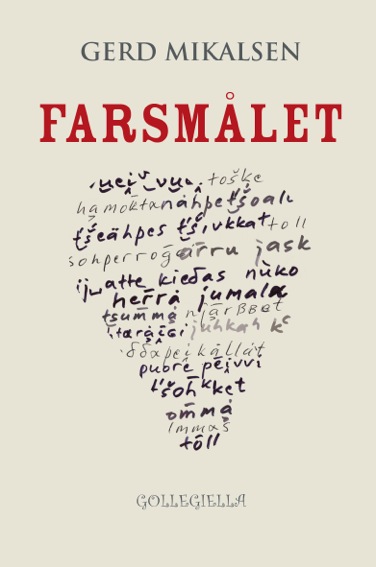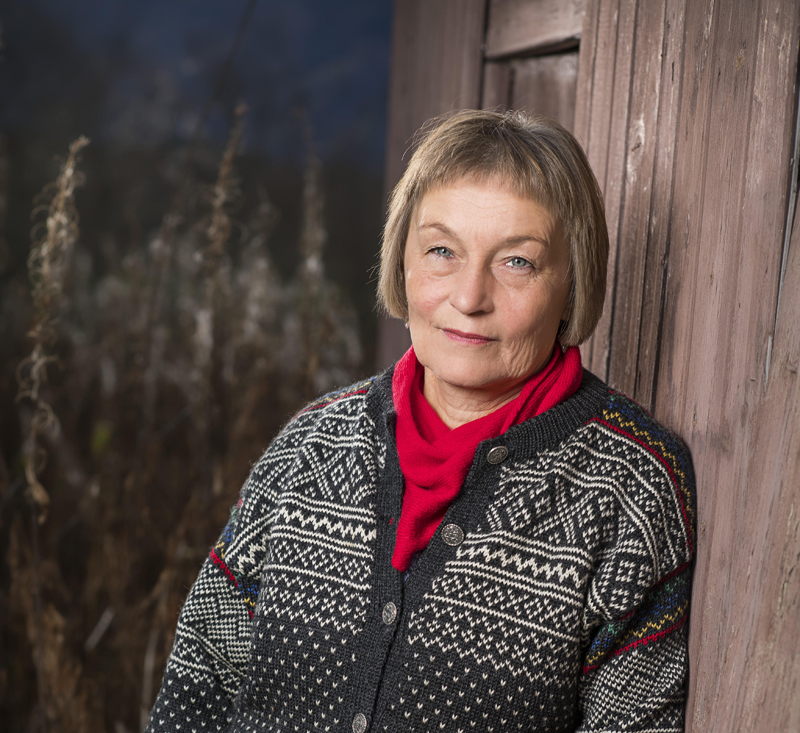
The grief over a lost language and a father who was apparently someone else was the reason why Gerd Mikalsen from Manndalen decided to embark on a writing project, which has resulted in her debut novel ”Farsmålet”.
Text: Torun Olsen
Published 10 January 2017
Through the eyes of the child, teenager and eventually adult Alma, Gerd Mikalsen describes growing up in a small village where the Sami language and culture were denied and viewed with shame and guilt. Later comes the struggle to overcome feelings of inferiority and to be seen as good enough.
- I was 17 years old when I realised that my father could speak Sami. Although I wondered many times, I didn't believe it was true when I first heard it. He was always so tight-lipped when Sami was spoken or was a topic," says Mikalsen.
The fact that she chose the title ”Farsmålet” for the book reflects her father's preoccupation with Norway, the country and the law. He wanted to appear Norwegian at all costs. The tension between Alma and her father is a recurring theme in the book, and it's primarily the language that is the source of her anxiety and frustration.
Gender, language and Laestadianism
- When we were children, there was a lot of secrecy surrounding everything to do with sex work. For example, we weren't allowed to be present when the animals mated. I remember that we used to hide ourselves to sneak a peek. Similarly, the Sami language was something that belonged to the adults' world. We saw that they had fun and seemed more relaxed when they spoke Sami, but we children weren't allowed to be part of this," recalls Mikalsen.
Although the focus is on the language, the book depicts many other aspects of the Sea Sami culture. We get an insight into life on a small farm, folklore, reading and, not least, the stern finger of Laestadianism.
- There were a lot of scares and thunderous speeches. It was scary as a child, but I was never afraid to go to the prayer centre. Laestadianism destroyed some people, but many also found solace in religion," says Mikalsen.
Just as relevant today
The novel is one of the first to address the issue of how Norwegianisation affected a society, and will reveal the wounds that were carved into a people who lose parts of their identity and self-worth.
Mikalsen hopes that the novel will be well received, that it will be a beautiful book to read, while at the same time emphasising its seriousness.
She adds that the feedback, including from young people who have read the novel, has been good. "Many recognise the depictions. Although many Sami symbols have been retrieved and young people are more confident in their Sami identity, most still lack the language.
- The book deals with topics that happened a long time ago, but are just as relevant today. "Despite progress and development, has something happened to our status?" asks Mikalsen.
Kåfjord author receives support for debut novel, Framtid i Nord
Unnan ságastallon áhčigiela birra
About Gerd Mikalsen
- born 1957
- from Manndalen in northern Troms
- has worked as an organic farmer, growing berries, vegetables and animals
- concerned with duodji and the processing of food
- debuts with the book Farsmålet