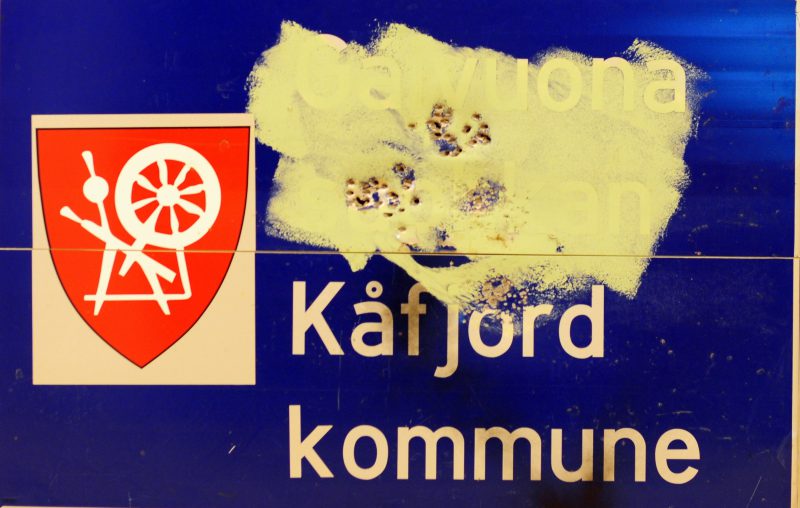
The Sami Language Act came into force in Kåfjord municipality in 1992. The law triggered a fierce and implacable battle that lasted a whole decade.
Disagreement and debate about the Sami language in Kåfjord was nothing new, but when the Sami Language Act came into force in 1992, the conflicts began in earnest and divided the population of the municipality.
The discussions, both in the media and in private homes, were emotional and irreconcilable. Those who welcomed the language law and wanted to strengthen and develop the Sámi language and culture in the municipality were pitted against those who felt overrun by the politicians and didn't want to identify with the Sámi. When the municipality's Sami name, Gáivuona, was placed at the top of the municipality's sign in 1994, it triggered violent anger among many. The Sami signs were painted over and cut up, and several employees in the municipality initiated actions to get the municipality out of the language area.

Pre-normalisation
The reasons for the conflicts were many and complex. The harsh Norwegianisation of the Sami, which had been going on for almost 100 years, had also left deep scars on Kåfjord. The burning of Finnmark and northern Troms after the Second World War removed most of the physical cultural heritage of the Sami and Kvens. When the municipality was to be rebuilt, only the Norwegian was allowed to take its place. For many, the war meant a final farewell to the Sami. By presenting themselves as Norwegians, the future looked brighter. The children who grew up after the war only learnt Norwegian, and Sami became a ”kitchen language”.
The Sami language and culture were looked down upon and associated with both pain and shame. The introduction of the Sámi Language Act in the 1990s meant that the municipality wanted to take back something that most people had finally put behind them, and many felt that it was like ripping open old wounds. The conflicts in the wake of the Sámi Language Act have undoubtedly been tiring and exhausting for many. Families were split up, friendships were broken, and the strife was palpable in both schools and workplaces. .
Reconciliation
Over the course of the 2000s, the dispute has calmed down for many reasons. According to the report ”Struggle, crisis and reconciliation”, reconciliation has taken place in the Kåfjord community. The report was written by Asle Høgmo and Paul Pedersen (NORUT), commissioned by the municipality in 2004. The background to the report was that the municipality wanted an evaluation of the Sámi policy measures in the municipality. Opponents have accepted that the Sami language is here to stay and that measures to strengthen Sami language and culture do not affect them more than they have to endure. At the same time, those who wish to do so have been given the opportunity to educate themselves and their children in Sami, and the elderly are given the opportunity to receive the word of God and pastoral care in their mother tongue, according to the report.
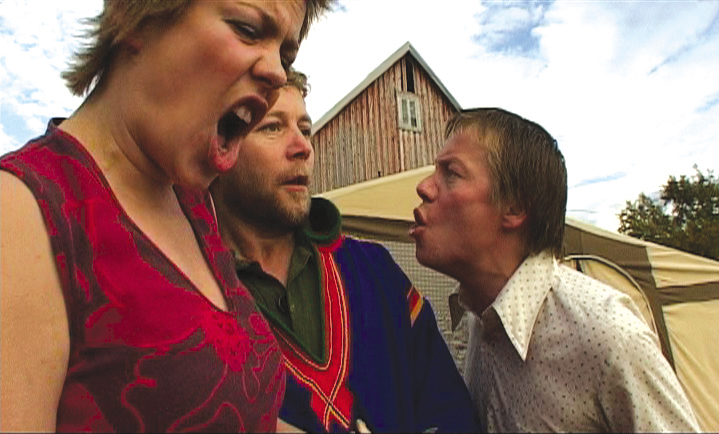
Riddu and Hooray for mummy
The Riddu Riđđu festival has received much of the credit for turning the Sea Sami cultural heritage from shame to pride. As the festival grew beyond municipal and national borders, the mood of shame and incitement also diminished.
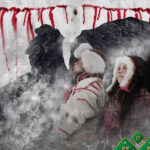
In 2001, Totalteatret premiered the production «Last night with mum» at Riddu Riđđu. In the play, three brothers meet with their wives to celebrate their mum's 60th birthday. One of the brothers has gone to university and discovered that they are Sami. The rest of the family does not agree. Part of the performance was made into the short film «Hurrah for Mum», and has been shown at festivals both at home and abroad.
Facts about the Language Act
- The Sámi language rules were implemented in 1992
- Includes the municipalities: Kautokeino, Karasjok, Porsanger, Tana, Nesseby, Kåfjord (Troms), Lavangen, Tysfjord and Snåsa.
- Purpose: to preserve and develop the Sami language by strengthening its use in public contexts
Hooray for mum - Totalteatret 2001
Sign shooters - Totalteatret Riddu 2001
Watch the documentary The silent battle
Sami shooting disc, NRK 2001
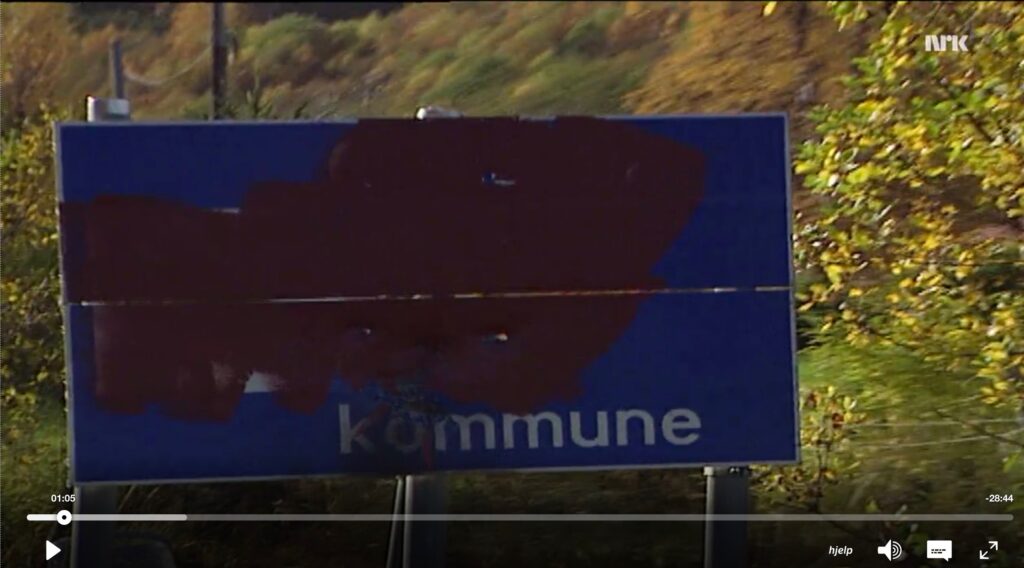
NRK programmes:
The setback - Tromsø and the five domination techniques, NRK 2012
Brennpunkt - Sami shooting disc 2001
NRK - The silent battle
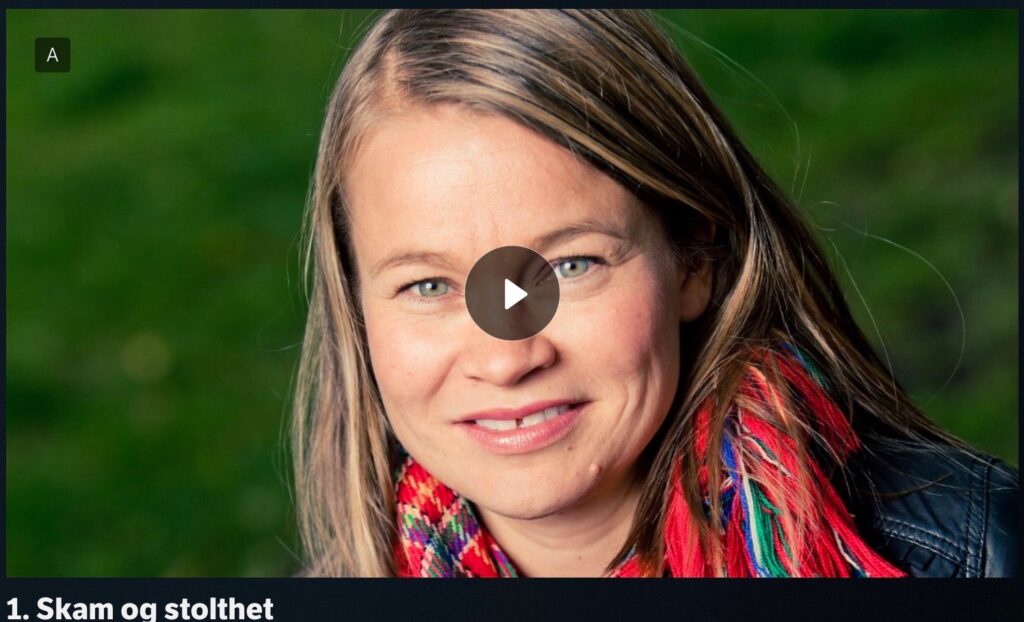
When Susann discovered that she was Sami, she was embarrassed. Being Sami was associated with something shameful and undesirable.
Current links
Firing away at the Sami language, Dagbladet 2001
Language battle over in Kåfjord, Nordlys 2004
The hot autumn - curriculum resistance in 1997, Sami school history 5, 2011