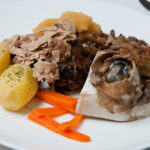
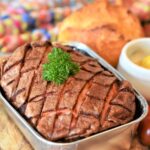
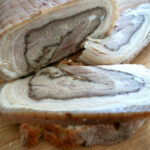
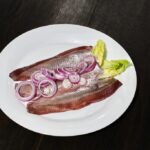
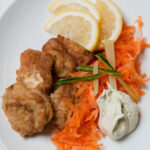
In Sámi tradition, you should utilise as much as possible of the animal that was slaughtered. Most of the offal was used in cooking. Most commonly, the food was salted, hung and dried, and then used in soups and stews.
Camber were washed and used for sausages, including black pudding.
Kidneys was salted and hung and used in soups.
Bible (abdomen) was salted and hung and used in soups and stews.
Fagerhua, intestines and cow urine was used for sausage casings.
Lungs were salted and hung. Dried lungs were used for meat soup.
Heart and tongue was salted and hung or pressed, and was used for spreads.
Stomach, leaf stomach and cecum were cleaned, washed and used for black pudding. The stomachs of large animals were lightly salted and dried, and used in soups.
Beef, veal and lamb liver was fried or boiled in brown sauce.
Sheep heads, calf heads and cow heads were boiled and eaten with flatbread. Sheep's heads were salted, dried and boiled for Christmas. They were often eaten on Fat Tuesday or Christmas Eve.
Sows' bellies was washed, salted and dried, and used for soup and stew.
The shanks (mostly sheep) were brined, dried and used for soup stock.
Sebum was filled into casings and dried. Often used for fish.
Lungemos (Skjervøy)
Lungs, hearts, some meat from heads or similar are boiled in a large pot. Then it is ground while it was still hot. Add salt, pepper and plenty of grated onion. The mass is then filled into bowls or moulds and cooled. When it gets cold, it hardens. Store in a cool place.
The dish can be used as a topping or for dinner and supper. The mash is then fried in a pan and served with potatoes and vegetables.
Infeed notch
Heart
Oesophagus
Intermediate floor
Lungs
Kidneys
Some meat
To 1kg:
about 1 tablespoon of salt
approx. 75 grams of flour
one large onion
about ½ teaspoon pepper
allspice
a little ginger
fat
Drain the innards well. Let the water drain off well. Cut up everything small. Mix in a good amount of meat and mince. Add flour, salt and finely chopped onion. Stir together and add the spices. Bake a test cake. Then smooth out the contents well in a greased pan or frying pan. Bake for about 20 minutes. Serve with pickled beetroot, turnip, swede, potatoes and sauerkraut.
Innmatkaker (Oksfjordhamn)
1 kg input
100 gr. kidney salt
200 gr. boiled potatoes
5 tablespoons onion
4-6 tablespoons potato flour
1 tbsp salt
1 tsp pepper
Meat can be added if desired
Drain the giblets and dry them in a cloth. Slice and mince twice with the suet, potatoes and onions. Fry in fat until cooked through.
Offal sausage (Kvænangsotn)
Liver
Heart
Kidneys
Spices
Salt
Liquid
Mel
Sheep arms
Grind the innards three times and mix in spices, liquid and flour. Fill with sheep intestines. Place in brine and dry. Serve with boiled potatoes and optional vegetables.
Liver steak
1 kg liver
1 tsp salt
some pepper
1 ½ tbsp flour
fat
about ¼ litre of milk
about ¼ litre of water
some onion
Remove the liver from the vinegar water and wash with clean water. Dry well. Cut finger-thick slices and remove the coarsest bile ducts and membranes. Put the stove on a high heat. Mix together salt, flour and pepper. Add fat to a hot pan, roll the slices in the mixture and brown them quickly. Add boiling milk and water. Simmer for about ½ hour or until they are cooked through.
Liver cake (Kåfjord)
Liver
Head cabbage leaves
Pepper
Salt
margarine
Grind the liver and add salt and pepper. Place the cabbage in a pan and fry slightly. Add the liver and fry until everything is cooked through. Serve with potatoes and vegetables. A little tallow can also be added.
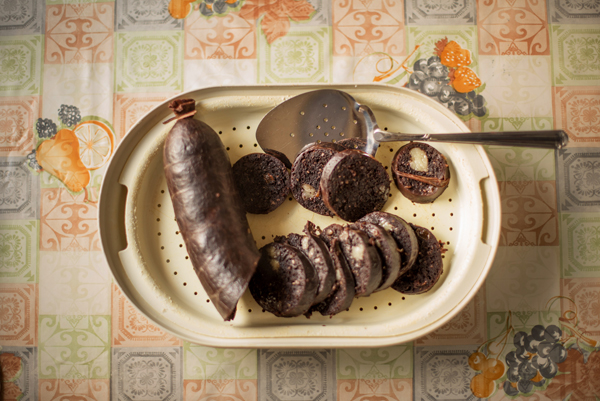
In the autumn, when they slaughtered the cattle, they made sausages and blood cakes. They mixed rye flour with the blood so that the mixture was suitably thick. To this they added fat and syrup, if they could spare it. All this was stuffed into intestines and cooked. Thicker blood dough was made for blood cakes. Sometimes they scratched the sausages and boiled them in milk. They thought it was delicious..
From Om sjøsamene by Anders Larsen (1950)
Blood mixture for sausages
2 litres of blood
2 tsp salt (approximately)
Sugar or syrup
Cloves and allspice
Coarse baking flour
Kidney algae in sliced pieces
Raisins (we dredge them in flour first so they don't fall into the bottom of the sausage)
See how Ruth Larsen makes black pudding in the film above.
Blodkleppmilk (Årviksand)
¼ litre of water
¼ litre of blood
1 cup of sugar
1 egg
rye flour
wheat flour
milk to put the buns in
Make a firm batter. Bring the milk to the boil. Make bowls with a spoon and add the milk.
Blood club (Kåfjord)
1 dl = approx. 1 cup
about 3 cups of blood
about 1 cup of water
about 2 cups of chopped suet
a little salt
some pepper
allspice
approx. ½ kg rye flour
Mix everything into a dough. Boil water with a little salt. Make balls of the dough and place in the boiling water. Cook for about ½ hour. Eat with syrup and butter. Boiled blood club was also cut into slices and browned in butter.
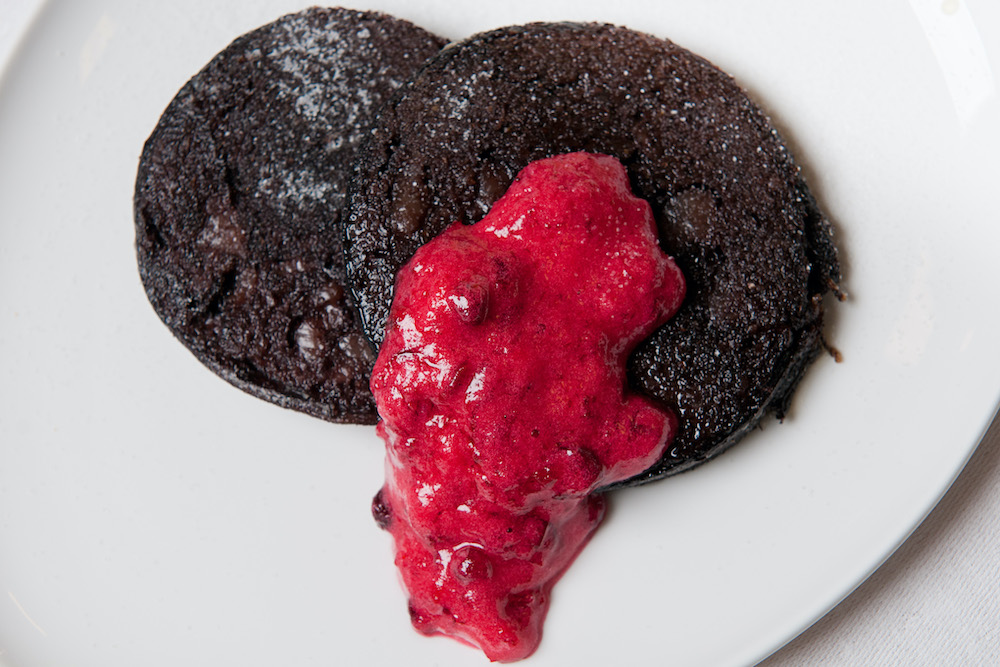
Blood pancake (Oksfjord)
3 tablespoons of semolina flour
1 tsp cinnamon
1 tablespoon of sugar
½ dl chopped kidney salt
1 tsp salt
½ litre of blood
The cakes can be baked in a frying pan or the batter can be filled into a well-greased pan and baked in the oven. Cut into suitable pieces when they have hardened.
Source: Booklet «Food and traditions in North Troms», 1997
Varranbánnogáhkut / Blood pancakes
Márffit / Blood sausages
Talgdøppa