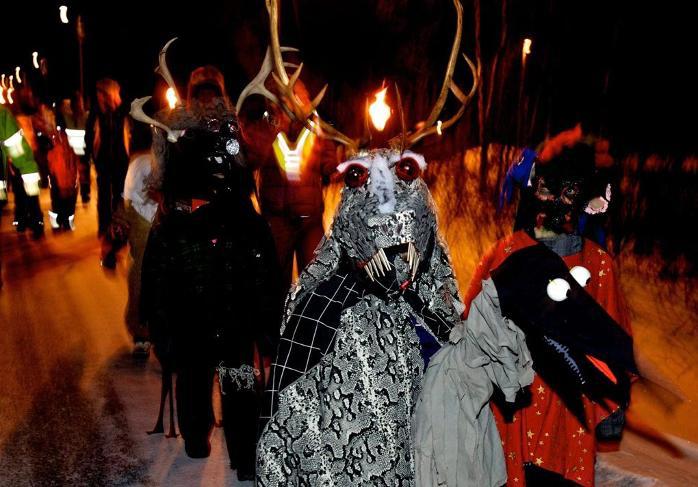
The Ođđabeaigállát / Santa Claus procession in Manndalen is a tradition that is said to have existed since time immemorial. The custom is unique to Manndalen, and is described as an important cultural carrier in the village.
Every New Year's Eve, older youths and adults gather in the village. They dress up in scary, terrifying masks made of leather, rags, bones, seaweed and whatever else they have to hand. They then march through the village, making noise, making aloes and spreading fear around them. The journey ends with dancing and revelry around a huge bonfire.
Mask making is an important activity for many people at Christmas, and creativity is rife. In the 80s and 90s, there were also competitions for the ”best” New Year's mask.
No one knows when and where the custom comes from. Similar customs can be found around the world. In Hungary, the so-called ”busjoaras” are considered one of the most spectacular folk festivals. In the city of Mohács, young men disguised in grotesque masks meet for an annual ceremony. They cause a ruckus in the streets and attack women with stockings filled with flour.
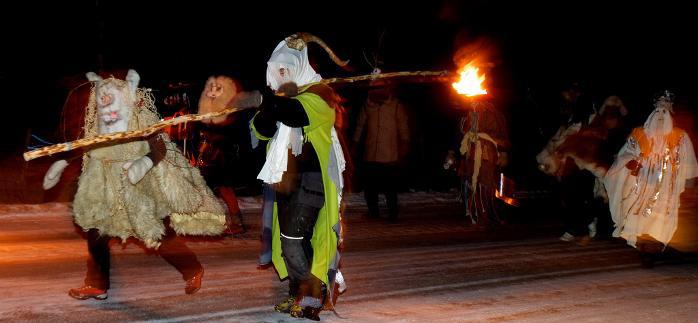
Similarities with Christmas buck
It is said that the tradition originally had many similarities with juovlastállu and the Christmas hump tradition, and that it was young boys and men who travelled in the train. At its longest, the train was up to a mile and a half long, and until 1980 it was also common to light bonfires along the mountainsides. Drinking alcohol was common then, as it is now, and the procession could be particularly frightening for women and children.
In the early hours of New Year's Eve, a much gentler version of the Santa Train is organised for children. This tradition is just over 20 years old. The train is followed by sweets and cuddles.

Source: Ođđabeaigállát, Daban og juovlastállu, Christmas traditions, Marit Anne Hauan, Booklet: A wild reversal of all reality
Radio
The Santa Train in Manndalen, NRK, National Library of Norway