How to make gáhkku / Sami bread
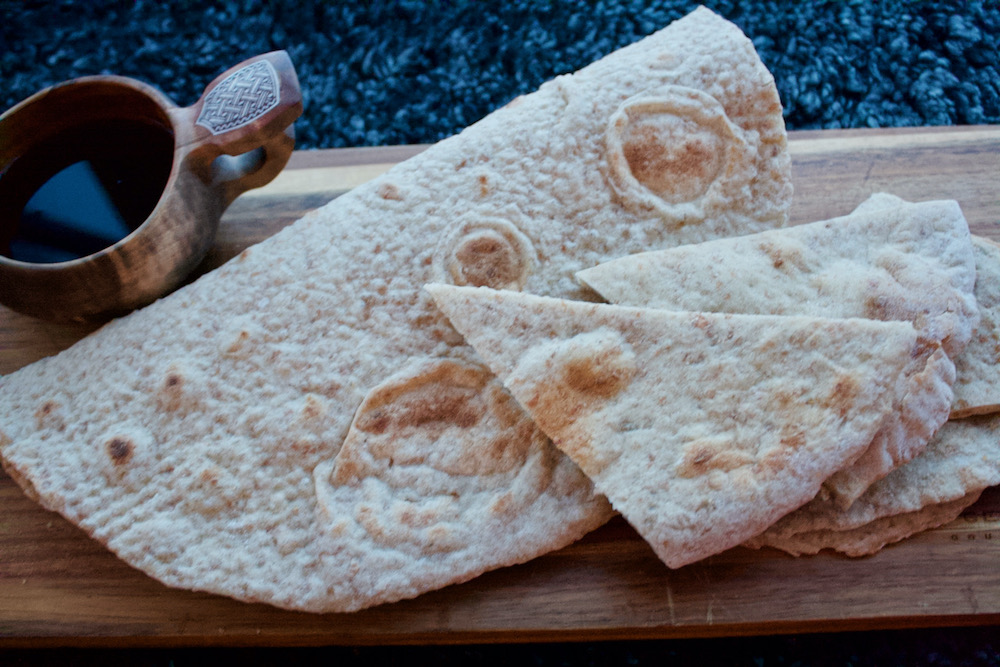
There are many recipes for this popular, traditional Sami bread gáhkku. The breads can be baked in many ways, and easily adapted to different occasions and environments.
If you're out in nature, you can take the dough with you, or just the flour mixture that you mix with water. Bake the bread on a stone, in a frying pan or on a stick over a fire.
Today, bread is often baked for festive occasions and served with casseroles or soups, including for roe ball soup or bidos
The bread can be baked with wheat flour only, or mixed with coarse flour. Both work well. If you use milk instead of water, the bread will be less chewy. You can also use both. If you want to add a little flavour to the bread, caraway or fennel is a good choice.
1 kg wheat flour
1/2 kg coarse flour
yeast
sugar or syrup to taste
1 tsp salt
water and/or milk
How to:
Mix the dry ingredients and add water. Work into a smooth dough.
The dough should rise. The longer it rises, the better!
Bake out thin cakes. Fry in pan, toasting 2-3 minutes on each side, or in the oven at 275 degrees.
Tip. You can replace the taco shells or tortilla strips with these breads.
Ordinary cake, gáhkku, is prepared by kneading flour and water together to form a dough, of which smaller pieces are made into cakes on the table with the pressure of the hand, on which a little flour is sprinkled so that the dough does not stick to the table. Also called melkake, jáffogáhkku, it was used quite a lot in Lyngen and especially Hasvik, but rarely in Porsanger (Peder Arild Mikalsen writes that these cakes were baked in the oven or on heated stones (bassit, goikadit), in the pot, on a stick or in the ashes).
From Lappenes forhold, Ole Thommassen, 1896-98