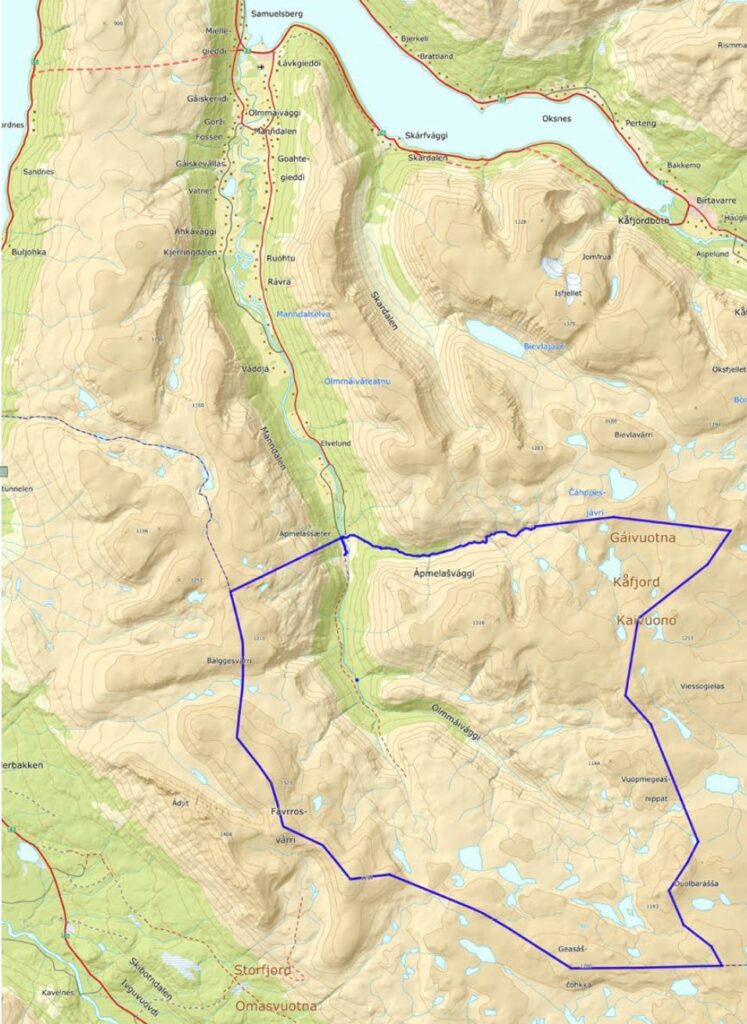
People in Manndalen have always harvested the natural resources in Svartskogen. The area has been used for grazing, hunting, haymaking, logging, access to materials and, more recently, for pasturing and recreation. After struggling for over a hundred years for ownership of Čáhput / Svartskogen, the people of Manndalen won a historic victory over the state in 2001.
Black forest judgement
The Sea Sami in North Troms had the right to use their land until the beginning of the 17th century. At that time, the King of Denmark-Norway decided that this should be the king's property. Later, the areas were sold on to a property speculator and then to local landowners.
In 1885, the state bought the upper common in Manndalen, called Svartskogen (Čáhput). However, the purchase was unclear, and the people of Manndalen claimed their rights to the area. From the 1920s, the state attempted to regulate the use of the forest and outlying land. They reported illegal logging, demanded lease agreements, held police interrogations and threatened punishment. The state's intervention met with great resistance from the rural population and most of the Manndalers continued to use the area as before.
In the 1990s, the dispute over Svartskogen ended up in the legal system, and on 5 October 2001, the Manndalers won the case in the Supreme Court. The judgement established that the villagers own the land in Čáhput. Throughout history, people in Manndalen have used the area for hunting, fishing, haymaking, grazing, logging, pastoral farming, teaching and hiking. The judgement has been described as historic for Sami rights.
Read more about the battle for Svartskogen
Seat operation
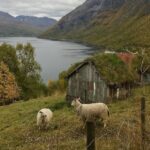
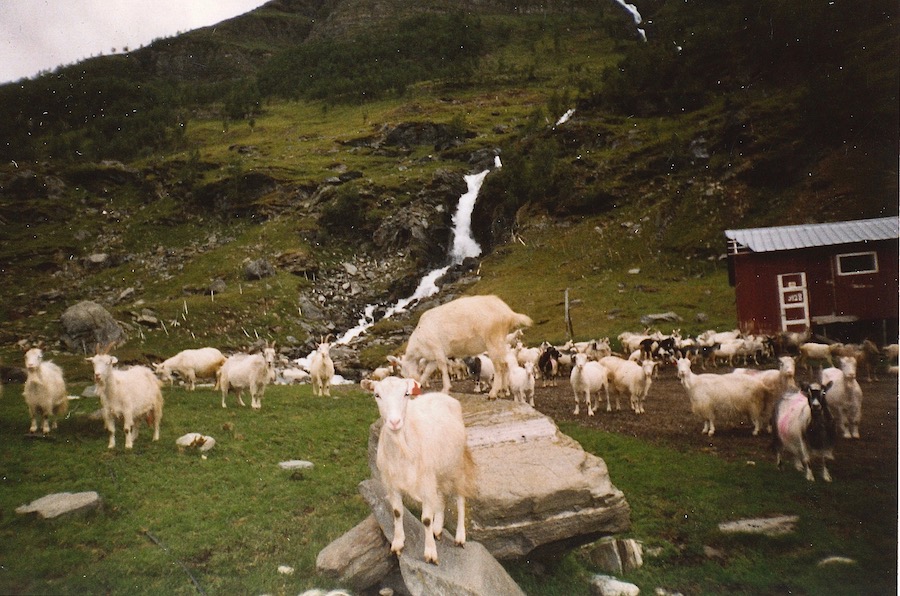
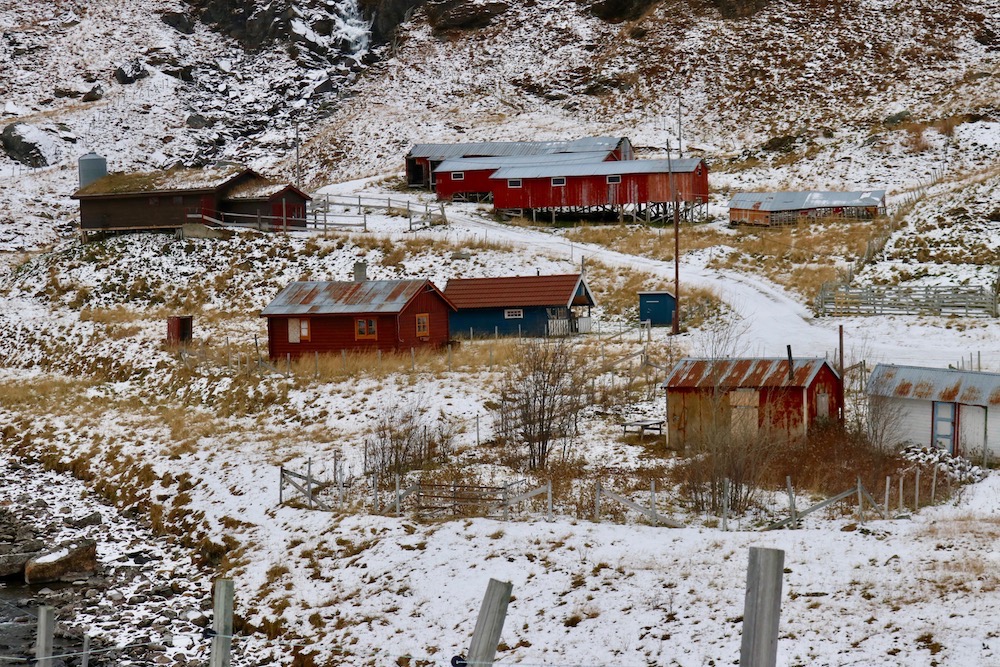
In 1950, three families established cow pastures here. Each family had 2-3 cows. They built granaries and kept the cows in communal barns. In 1955 and 1956, goat pens were established on both sides of the river. Within two or three years, 11 goat pens had been established. At most, 15 farms had pastures here, and there were around 800 goats in the area. The stay on the farm normally lasted from June to the beginning of September. The last year of goat grazing here was in 2013.
The intensive grazing has created a special landscape. According to the County Governor of Troms, the farm has a distinctive cultural landscape with buildings, diverse flora and historical depth. The area is considered in the highest protection category. As of 2019, Čáhput is used for grazing by around 800 sheep and 30 cows. In addition, reindeer from the Skárfvággi and Helligskogen reindeer grazing districts mainly graze on the high mountains.
Outfield mowing
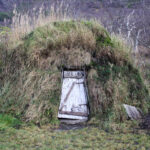
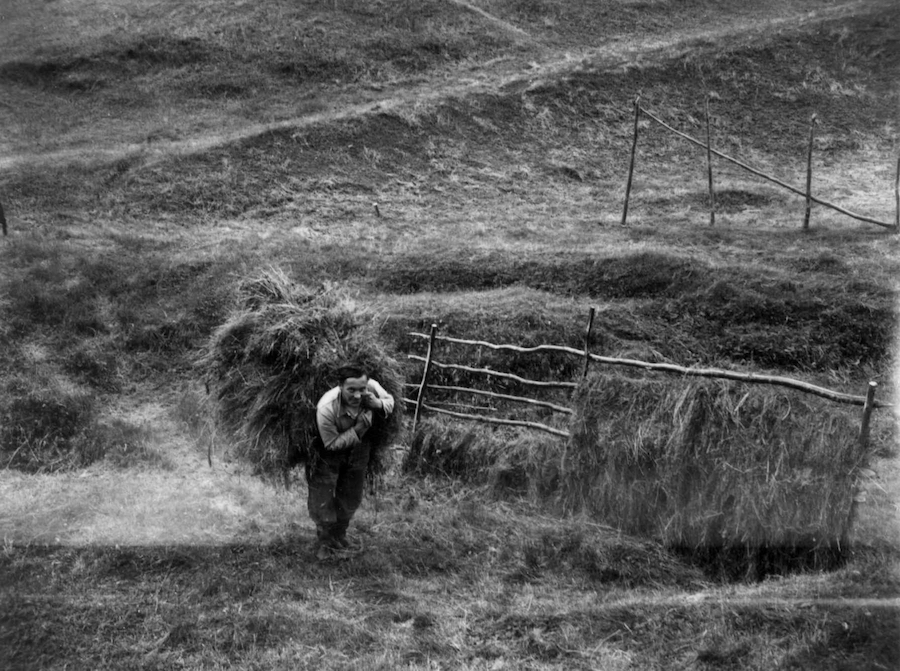
Čáhput has been used to collect fodder for livestock since the early 1800s. Until the Second World War, much of the agricultural land in the Manndalen valley was used for haymaking and much of this was in Čáhput. The harvest began in late summer and could last up to several weeks. People stayed overnight in rissegoahtit - a framework of logs and twigs covered with grass. The grass was cut with a scythe and dried on the ground or hung on trees. Some people used haystacks consisting of 4-5 poles between trees, lashed together with twine. The dry hay was stored in haystacks and brought down in the winter when sledging was possible. A family could buy enough fodder for 10-20 sheep in Čáhput. People often used the same hayfield year after year.
Hunting and fishing
Čáhput has been used for hunting and fishing since time immemorial. There are stories of wild reindeer hunting at the top of Manndalen, and in Skáidevággi there are remains of a possible stone fence for wild reindeer hunting. Grouse have been hunted for sale throughout the area. People built lodges to live in during the hunt. There has also been a long tradition of fishing for Arctic char in the lakes on the mountain, and in the past you could almost «fetch» fish for dinner in the river.

Jan Baalsrud's flight
Norway was occupied by Germany from 1940-1945. At the end of March 1943, Jan Baalsrud and several soldiers took a fishing boat from England to northern Norway to organise saboteur groups. On the outer coast of Troms, the boat was discovered and attacked. Two men were killed and nine were arrested and later executed in Tromsø. Jan Baalsrud escaped and embarked on an arduous flight towards neutral Sweden. Along the way, he received help from the local population in many places. Baalsrud reached Furuflaten, weak and destitute, and was eventually transported up to the mountain west of Manndalen. After 16 days on the mountain, he was transferred to the cave here in Skáidi. In Manndalen, around twenty people were involved in arranging clothes, food and caring for him. Baalsrud stayed in the cave for 17 days before he was transported to Sweden by reindeer herders from Gálggojávri. In addition to the helpers, many people in Manndalen knew about the case. All of them were in mortal danger, and it is likely that the entire village would have been severely punished if they had been revealed. At Jan Baalsrud's own request, his urn is buried in the cemetery in Manndalen.
Lukta av Čáhput / Svartskogen, narrated by Harald Furuseth, read by Tor Mikalsen
Outfield mowing in Čáhput / Svartskogen, narrated by Harald Furuseth, read by Tor Mikalsen
Midwife to the underground, Harry Solhaug
Bear hunter Aslak is a bear midwife
Escaped to Lilledalen during the evacuation
My fingers were worth more
Čearpmat, narrated by Aksel Salo
Battle with golgolaš at Niviálli, Harry Solhaug
Worth more than my fingers, told by Harry Solhaug
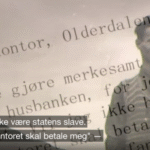
Extract about Svartskogen from the film: Urkultur på samisk grunn, NRK 1967