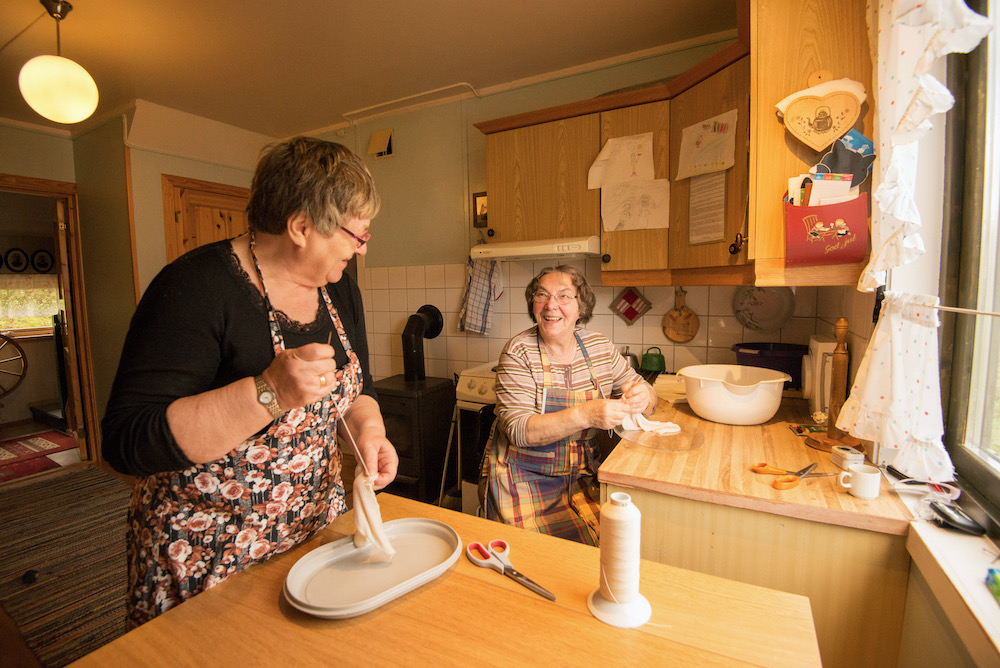
- We thought colon sausages were the best. We liked them so much when we were young. Even though it was a poor decade, our parents believed that food should come first. They didn't sell any animals. We had so much meat. Yes, we had so much of everything. Sisters Ruth Bergljot Larsen and Eliva Antona Henriksen from Skardalen, making black pudding.
We sew the gut with cotton thread. We can sew them and put them in the freezer, and then take them out when we have blood. We can also freeze the blood, it's not a problem. It's not like it was in the old days when you didn't have freezers. They had outbuildings, and when it got cold, they stacked it outside. So we didn't slaughter until it was below freezing. It was the same with rowan berries; they couldn't be picked until there was a night frost. They weren't so sour when they had sprouted. Yes, because when they freeze, some of the carbohydrates probably turn into sugar. Just like potatoes, if they'd been frozen in a cellar, you could feel it straight away. If it had been cold in the cellar, the potato became sweet.
Once we've sewn the intestines, we soak them in vinegar water and then rinse them in there. Before we fill them with blood, we fill them with water to check if there's anything in them.
Blood mixture for sausages
2 litres of blood
2 tsp salt (approximately)
Sugar or syrup
Cloves and allspice
Coarse baking flour
Kidney algae in sliced pieces
Raisins (We first dredge them in flour so they don't fall into the bottom of the sausage).
- Now it smells like sausage. It's that carnation. I used to taste the blood to see if anything was missing.
- Add another half teaspoon of allspice and cloves!
Whisk the blood mixture until it foams properly. It must not be too thick or the sausage will crack. It can be left to rest for a while before we fill it in.
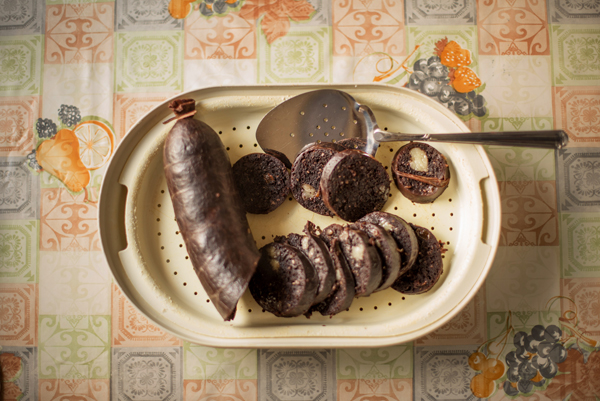
The innards, such as sausage, were cooked in the autumn. There was so much blood sausage eating every autumn. Mum had two sisters and an auntie who lived in Oslo, and every autumn she made sausages and sent them down to them. I think they waited every autumn for those sausages. - Yes, they waited. They knew she was sending them. Do you think she sent food down there during the war? Right up until the postman said to her: «Don't send any more parcels.» She didn't know what had happened, but she assumed that he'd received a request for suitcases that people were sending so much. Then mum said: «Yes, but her siblings don't have any food.» The postman replied: «Yes, then you must send from someone who is dead, send in their name.» »No,» she said, «I don't send from dead people.»
- My grandfather told me that they had just got married, and it was at the end of the 19th century. They were living with their in-laws, but then my grandfather said: «Now we're going to build a house.» They applied for a loan. It was very rare to apply for a loan in those days. But they did, and then they didn't get the money. Grandad travelled to talk to the bank. They said the money had been paid out. But grandad hadn't received it. He says that he hasn't got the money, but it didn't help. «The money's been paid out, so you just have to pay interest and instalments.» And the grandfather has to do that, otherwise they'll come and armour-plate and take everything they have. He tried everything, but nothing helped. He's in total despair. But then his brother suddenly says: «Let's write to the king.» And they wrote a letter to the king and told him the sad story of how they couldn't afford to buy a house anymore because they had to pay instalments on a loan they hadn't received. It didn't take long after they had written to the king to be told that the debt had been cancelled.
So the king had sorted things out for them. Was it any wonder that they valued the king so highly? They had pictures of the king in every house. The king knew and the king did.
But also in our more recent decade, in the 1950s, there was a man here in Skardalen who had two boys in the army at the same time. The land was steeply sloped and only mowed with a scythe, but he couldn't do the mowing because his father had kidney disease and he couldn't do anything. If they didn't feed all the animals, they would starve to death, both them and the animals. The boy tried to get home to help, but it was impossible. So he wrote to the king and told him how they were doing. Just a few days after he had sent the letter, one of the boys was called out and lined up. He could pack up and go home. By then the king had sorted things out. It was also Haakon. So we loved the king and we pray for the royal family to this day, every Sunday.
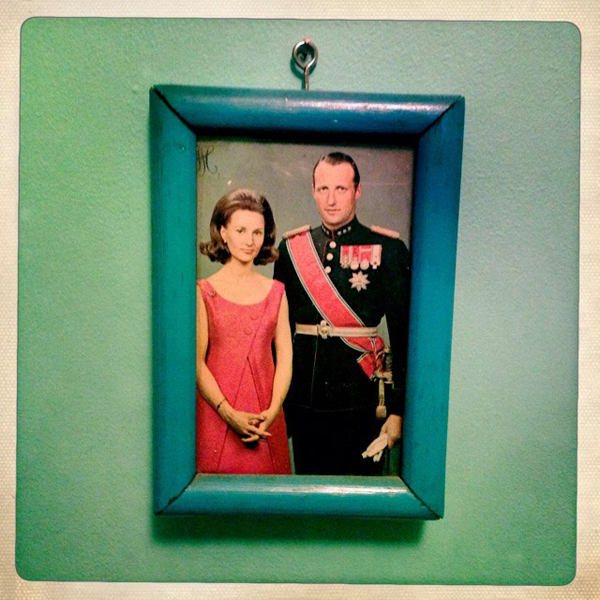
When Sonja and Harald got engaged, mum hung their engagement photo in the living room.
Watch the film with Ruth Larsen making black pudding:
Watch the film with Bjørg Fossli making roe ball soup
Current links
Life in the old small kitchens, NRK
Interview with Sámi woman from Manndalen 1975, National Library of Norway