The text is written by Ingvild Larsen for Årbok for Nord-Troms 2022.
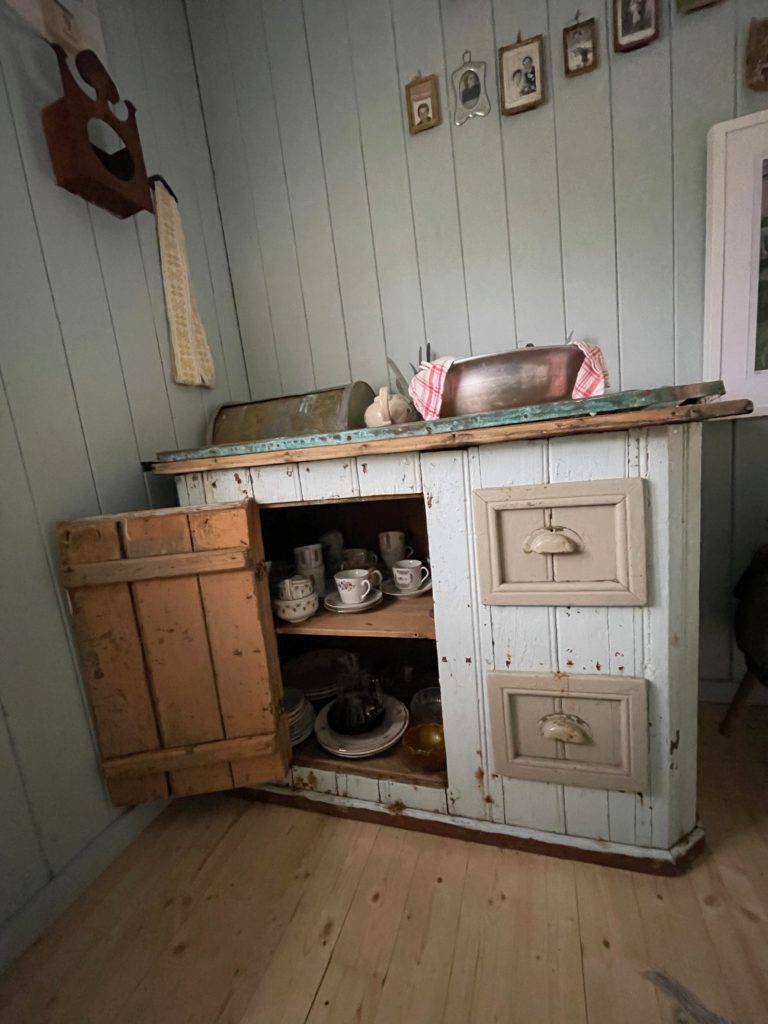
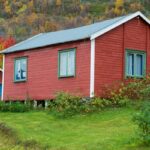
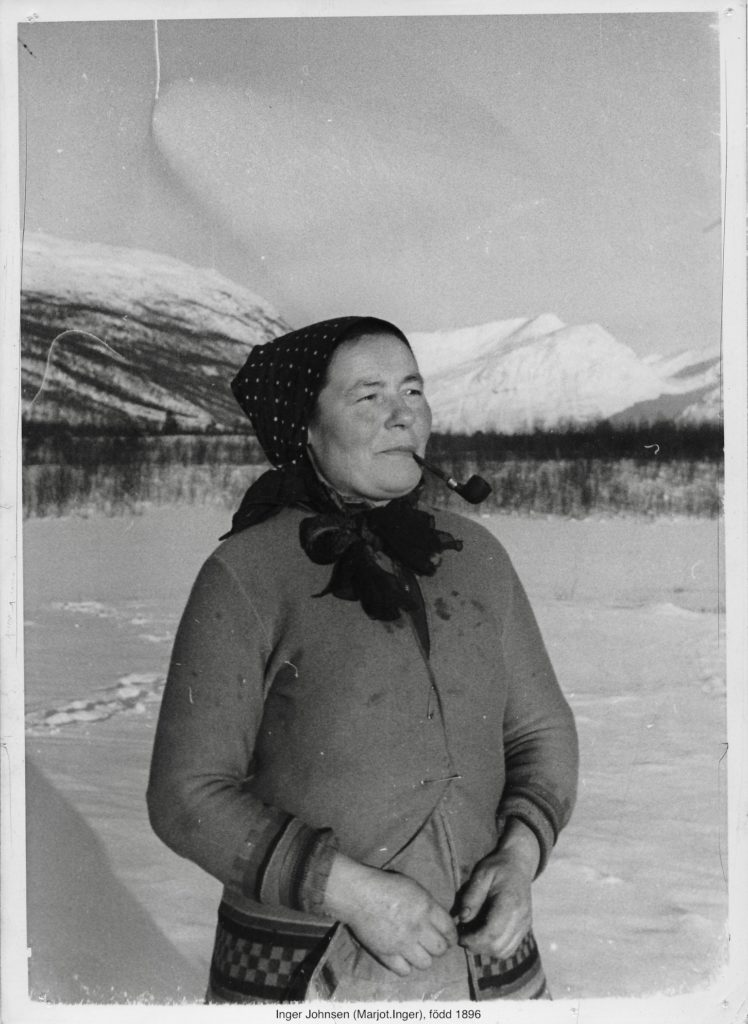
The small house in Kjerringdalen in Kåfjord was built by Márjj'Iŋgá just after the Second World War. Da Márjj'Iŋgá was born in 1893, Sami was the everyday language in Kjerringdalen. Eventually, Norwegian was also spoken in the village, and she was often called Marj-Inger (Marjinger). Her given name was Inger Alette Johnsen.
Marjinger lived in the house from 1946 to 1976. After 1976, the house fell into disrepair. In 2021, the house was restored by Tor Nilsen and turned into a small museum.

The empty house
When MarjInger lived in the house, she had many visitors. There was hustle and bustle, joy and sorrow. When she moved out in 1976, the house was left empty. Furniture, utensils and clothes were left in the house. Weather and wind tore and tore at the little house, which stood there so abandoned. From the breakfast table across the road, we could follow the house through all seasons. Each winter that melted away left a house in increasingly poor condition.
Flashes of light in the kitchen window
On his autumn evenings, you could see light in Marjinger's kitchen window. Was there someone in the house? The light brought to mind the hustle and bustle of the old days, like glimpses of the past passing by. This glow of light, the reflections of the street lights in the kitchen window, contributed to many wonderful conversations about her.
The stories of Marjinger's life and work inspired Tor to grab his toolbox, with financial support from the Sami Parliament. Many volunteer hours were put into the project, both by Tor and other good helpers.
Refurbishment and reinstatement
By the time the renovation began, the house had fallen into a state of disrepair. Everything in the house was photographed, cleared out and stored. What could be reused of panelling and other materials was stored and preserved. Textiles were washed and hung out to dry. Even after several months of airing, the scent of the detergents of the past was still noticeable.
The rafters, floor joists and flooring were completely rotten and had to be replaced. Parts of the timber box and some of the interior and exterior panelling were salvaged and reused. The paint on the exterior walls had worn away decades ago. Fortunately, there was still some paint left just below the ceiling. With the help of a colour test, the house was restored to its original blue colour. The interior of the house was also painted as it had been previously.
The house was completed in autumn 2021. Many people attended the opening ceremony, and younger generations were given an insight into the way of life of the old days.
A living museum
The Centre for Northern Peoples disseminates the cultural heritage of Marjinger. From being an abandoned and dilapidated house, it had now become a small museum. Stories have been collected, both for preservation and dissemination. Those who knew Marjinger have said that entering the house is like entering the past, that they can picture her sitting in the kitchen.
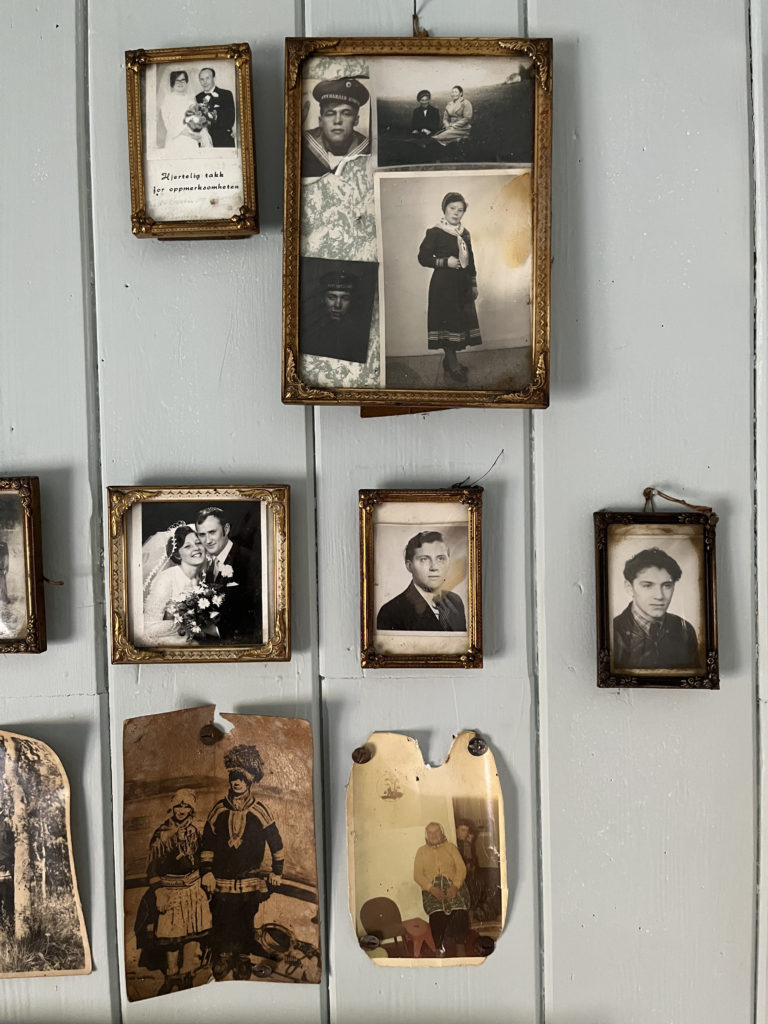
The building has housed several exhibitions. Visual artist Gjert Rognli has had a photo exhibition that opened in 2021. From autumn 2022, the legacy of Jan Guettler has been conveyed here. Guettler visited Kjerringdalen before the war, photographing and documenting. His photographic material, which adorns the walls of the house, provides a unique insight into local history.
How was MarjInger?
In many stories about Marjinger, she comes across as a tough lady. She lived alone in the house and supported herself with odd jobs and leatherwork. She did not allow herself to be dictated to by others, and was one of the few people in Kjerringdalen who did not attend a Laestadian church.
Marjinger was sociable, fond of people and well-liked. Many people in the village have fond memories of her, or have heard amusing stories. In several kitchens there was a photo of Marjinger smoking a pipe.
Life was full of both joys and challenges. Marjinger had a hearing impairment, at a time when there were few assistive devices. However, she was a strong woman and still managed well in daily life. Letters from the house show that she had contact with people outside the village. In one of these we can read that Marjinger made hay and sent it to relatives in Repparfjord.
The stories about Marjinger paint a picture of a lady with good humour, but also with a temper;
«That was when she lived up here. She worked at Løkvollen. She used to come here with buckets of water when she came home from work. -Because she didn't have running water. It was supposed to be that when you'd eaten dinner, you had to carry the water bucket home to her. But she started a little before me with a small bucket in her hand, one of those two-litre buckets. Then she'd go home and make coffee until the water carrier arrived. It had been mild during the day, and dripped from the roof in the corner where she had to turn round the house. There was frozen ice in the afternoon. Then she arrived with that water bucket, and just as she rounded the corner she fell on her arse with the bucket in her hand. She saved the water that was in the bucket. But she didn't get up, she just knelt down and clasped her hands. Then she was shackled so that her feet glowed.» (narrated by Tor Nilsen).
«That's when Marjinger was 70 or 75 years old. She was a bit of a brute and not very religious. We were there now, and a slightly older lady in the neighbourhood was also there. As she was leaving, she said to Marjinger: "Tomorrow, when it's your birthday, I'm coming here for coffee too. Yes, Marjinger replied, but if you think you're going to get any coffee here, you're wrong. They don't serve coffee here, but if you fancy a drink, just come along - because there's plenty of spirits here. She had bought four bottles of spirits for her birthday» (narrated by Tor Nilsen).