Kven is a national minority language spoken mainly in Troms and Finnmark counties. The language is part of the Finno-Ugric language family and is a Baltic Sea Finnish language. The language is closely related to Tornedal Finnish Meänkieli in Sweden and the Northern Finnish dialects. In Sweden, Meänkieli is a national minority language.
Over the centuries, Kven has developed independently of Finnish in Finland, and has been heavily influenced by both northern Norwegian dialects and Sami. The differences in vocabulary and, to some extent, grammar, gradually became so great that there was a basis for talking about a separate language. In 2005, Kven was recognised as a minority language in Norway.
Kven can be divided into two dialect areas: western and eastern. The western area stretches from Lyngen to Porsangerfjorden. In this area, Kven is characterised by the language spoken in Tornedalen in the 17th and 18th centuries.
The eastern part is found in the Varanger-Pasvik area. The dialect type here is Northern Finnish, the result of primarily labour immigration from all over northern Finland, as well as from other parts of Finland.
Like most Baltic languages, Kven is an endangered language. It is estimated that around 4,000 Kven people speak Finnish today, and around 2,000-2,500 speak Kven dialects.
Pre-normalisation
As a result of the harsh Norwegianisation policy that was pursued against the Sami and the Kvens for around 100 years from the mid-19th century, the use of the Kven language declined sharply. Like Sami, Kven was seen as an undesirable foreign element in an emerging nationalistic Norway, which cultivated the idea of one nation - one people - one language. It was forbidden to use both Kven and Sami in schools. For a time, the languages were accepted as auxiliary languages, but the School Act of 1936 banned the use of Finnish or Kven altogether. This ban was lifted at the end of the 1960s.
For the Kven population, the path to economic growth and prosperity was the same as abandoning their language and culture in favour of Norwegian. The Kvens were seen as immigrants who came here voluntarily and had thus chosen to become Norwegian. They therefore had no rights related to language and culture. Many Kvens looked down on their cultural background and chose not to recognise it.
Kven today
Attitudes to Kven culture and language changed during the 1960s and 1970s, and an ethnic awareness and awakening took place among the Kvens. Associations emerged at both local and national level, which gradually contributed to the revitalisation of the language and culture. In 1987, the National Association of Norwegian Kvens was founded.
Finnish was taught at both Finnmark University College and the University of Tromsø, and during the 1980s and 1990s Finnish was taught at several schools in Troms and Finnmark.
There have been many in-depth discussions about whether Kven can be perceived as a separate language or as a Finnish dialect, since the language has developed as a spoken language.
When Kven was recognised as a national minority language in 2005, work began on developing a written Kven language. The Kven Institute has national responsibility for the development of the Kven language in Norway. The development of Kven into a written language began in 2007, when the Kven Language Committee and Language Council were established. The aim of the language work is to create a writing standard based on various Kven dialects.
Watch the documentary The secret language, NRK 2015
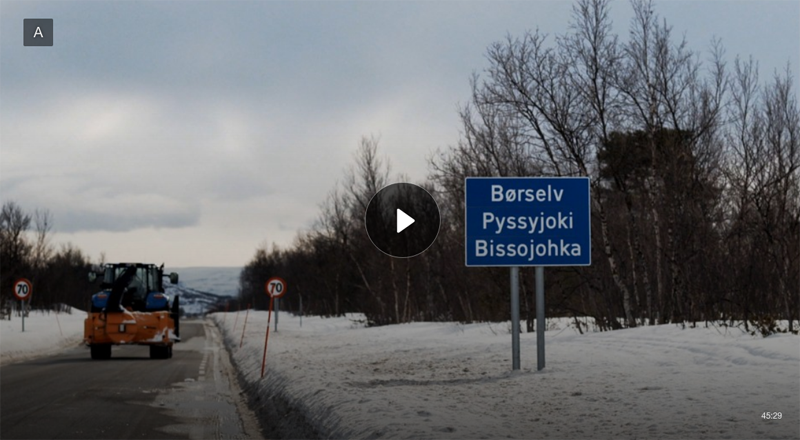
Kven has been spoken in our northernmost counties for 800 years. Yet very few Norwegians know about the Kvens and their language. In the dramatic surroundings of Finnmark, we meet a group of people with an often forgotten history. What happens to you when your mother tongue is not recognised as a real language? And what is it like for modern-day Kvens to rediscover their language and identity?
About Kven
- Baltic Sea Finnish language
- part of the Finno-Ugric language family
- closely related to Tornedal Finnish Meänkieli and the North Frisian dialects
- divided into western and eastern dialects
- Oral language among older Kvens
- many different Kven dialects
- Recognised as a minority language in 2005
- spoken by around 2000-2500
From Grand Hotel to Köykiniemi
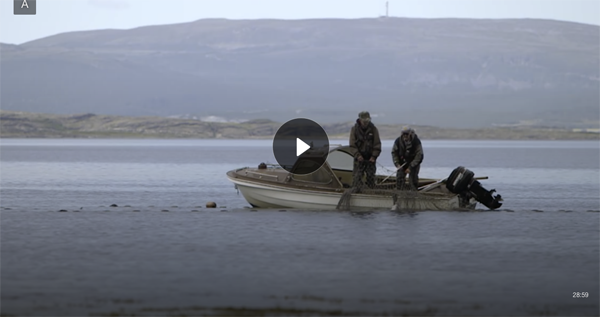
Meän kieli - meän siivet
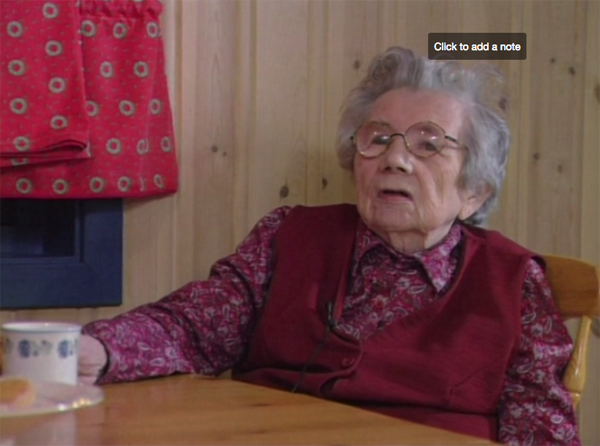
Kven cultural walk, NRK

Our stories - Bente Pedersen
Tule sisäle
What is a vein?
Äitin sanat - Mother's words
Sources and relevant links
Kven influence on Norwegian in North Troms, Hilde Sollid, Ottar
The Kvens - a forgotten minority, seminar report 1994, National Library of Norway
The history and culture of the Kvens, seminar report 1997, National Library of Norway
School conditions in North Troms, Eivind Bråstad Jensen, Årbok for Nord-Troms
Ethnicity and language in Nord-Troms after the 1930 census, Jan Antonsen, Årbok for Nord-Troms
Finnish words and expressions in our dialects, Anton Sommerseth, Årbok for Nord-Troms
Language and ethnicity in Nord-Troms 1910-1950, Jan Antonsen, Årbok for Nord-Troms
Three languages in Nordreisa, Marjut Aikio and Anna-Riitta Lindgren, Årbok for Nord-Troms
Three tribes meeting in schools, Tor-Egil Lund, Årbok for Nord-Troms
In the media
Radio and TV
What is happening? What's happening with Kven language and culture, NRK 2019
1977: Kven/Finnish language in the process of dying out, NRK
Raja, documentary series about the Meänkilei language
Articles in the media
Grandfather teaches Iver Isak the endangered Kven language, NRK
With a secret language at school, NRK 2017
Kven language gives pride in Storfjord, NRK 2014
Anna-Kaisa tries to save the language from dying out, NRK 2017