After fighting for more than a hundred years over property rights to Čáhput / Svartskogen, the people of Manndalen won a historic victory over the state in 2001. The Supreme Court judgement concluded that the inhabitants of Manndalen have both the right to use and the right to own the large area of open land. The basis for the judgement was «age-old use».
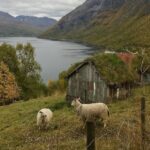
For more than a hundred years, a 116 square kilometre area of land in Manndalen was the subject of dispute between the villagers and the state authorities. People in Manndalen have always harvested the natural resources in Svartskogen. The area has been used for grazing, hunting, haymaking, wood harvesting, access to materials and, more recently, for pasturing and recreation.
The Sea Sami had right of disposal
Historical sources show that the Sea Sami in North Troms had the right to use their land until the beginning of the 17th century. At that time, the King of Denmark-Norway decided that this should be the king's estate. In 1666, the treasury was empty and King Fredrik III sold the area to Joachim Irgens. The area then had various private owners until Svartskogen became part of the Skjervøy estate. When the widow of the last estate owner, Ovidia Fredrikke Lyng, died in 1848, the estate was purchased by Foreningen til Ophævelse av Leileningsvæsenet i Skjervø. The aim of the organisation was to sell individual farms so that the occupants could become freeholders. The organisation met with strong resistance, and got nowhere in prohibiting the commons from using the area.
In 1885, Svartskogen was sold to the state, with the aim of sorting out the relationship between reindeer herding and the permanent residents. The work of the Norwegian-Swedish border commission in 1913 documented the inhabitants« use of Svartskogen and their perception of the area as »common property".
The state goes to battle
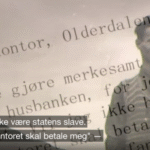
35 years after the purchase, the state attempted to regulate the villagers« use of the forest for the first time. It was in 1920 when the forest manager in Lyngen announced that »For the future, it is strictly forbidden to fell and harvest lettuces in the state's purchased property Mandalens øvre almenning".
In 1921, 14 landowners entered into agreements to package their harvests in Svartskogen, but neither the agreements nor the ban were respected by the population. In the autumn of 1921, the forest manager therefore reported several people for having «illegally harvested slash in the Lappevæsenet's property».
A number of people were questioned, and all of them denied any wrongdoing as they believed they had the right to use the forest. In March 1922, the forest manager wrote the following to the chief of police in Tromsø:
In my opinion, based on the available information, it would not lead to any result to bring criminal proceedings against the defendants as they have probably claimed the right to use the common.
The case was dropped, although it was maintained that the villagers had no right to use the forest. Since then, the state has tried unsuccessfully on several occasions to gain control over the local use of Svartskogen. They have reported illegal logging, held police interrogations, negotiated and threatened.
In 1993, the Norwegian state brought a case before the Land Commission (a special court established by the Storting in 1985) for Nordland and Troms to determine the property boundaries between state and private land in Kåfjord and Storfjord municipalities. The inhabitants of Manndal were awarded grazing rights for the livestock that can be winter-fed on the farm, and the permanent residents were granted the right to log in Svartskogen.
The villagers own Svartskogen
The people of Manndalen appealed the judgement to the Supreme Court and won the case in 2001. The judgement established that the villagers own land in Manndalen and adjacent mountain stretches. The judgement states that the Manndalers« right to the area is based on the fact that »the use provides a basis for the inheritance of rights through age-old use", regardless of Norway's obligations under international law.
The judgement has been described as historic for Sami rights, and the outcome would probably have been completely different without the Manndalings' persistent resistance to the authorities for over a hundred years.
This is how Ole-Henrik Magga was quoted by Nordlys when the victory was celebrated in Svartskogen in 2004:
The Svartskog judgement has a reach far beyond Manndalen and Norway's borders. "What has happened here has strengthened Sami rights in the Norwegian legal system, and has attracted international attention. A local rights struggle has become an international example, a look to Gàivuotna, look to Norway," says Ole Henrik Magga, Chair of the UN Permanent Forum on Indigenous Issues.
Today, Čáhput Siida manages the property rights to Svartskogen on behalf of the people of Manndalen.
Sources and relevant links
Judgement in the Supreme Court, Lovdata
Victory party in Svartskogen, Nordlys
In this village, everyone gets free firewood
Svartskogen - the case, Store norske leksikon
Rules of use for Svartskogen, manndalen.no
Bjerkli, Bjørn: Svartskogen in Manndalen - Sami customary use and management. Nord-Troms Museum Writings 1/2004. 2004
Bjerkli, Bjørn: Svartskogen - a story of resistance and defence of rights . I: Nilsen, G. and R. Sundelin (eds.): Cultural encounters in Nord-Troms . Nord-Troms Museum. 2
Svartskogen - the case
> In 1993, the state sues property owners in Manndalen before the Land Commission for Nordland and Troms. The state claims that it owns the area and that the villagers have no rights of use.
> A judgement handed down by the Land Use Commission grants the state ownership of the area, but states that the residents of Manndalen have some rights of use.
> The occupiers do not accept the judgement and are appealing the case to the Supreme Court.
> 2001: A unanimous judgement in the Supreme Court states that the villagers own the area.
> Together with the Selbu case, the judgement is considered to represent a paradigm shift in Sami law, as the Supreme Court in these cases emphasises Sami use and Sami customs in the application of Norwegian law.