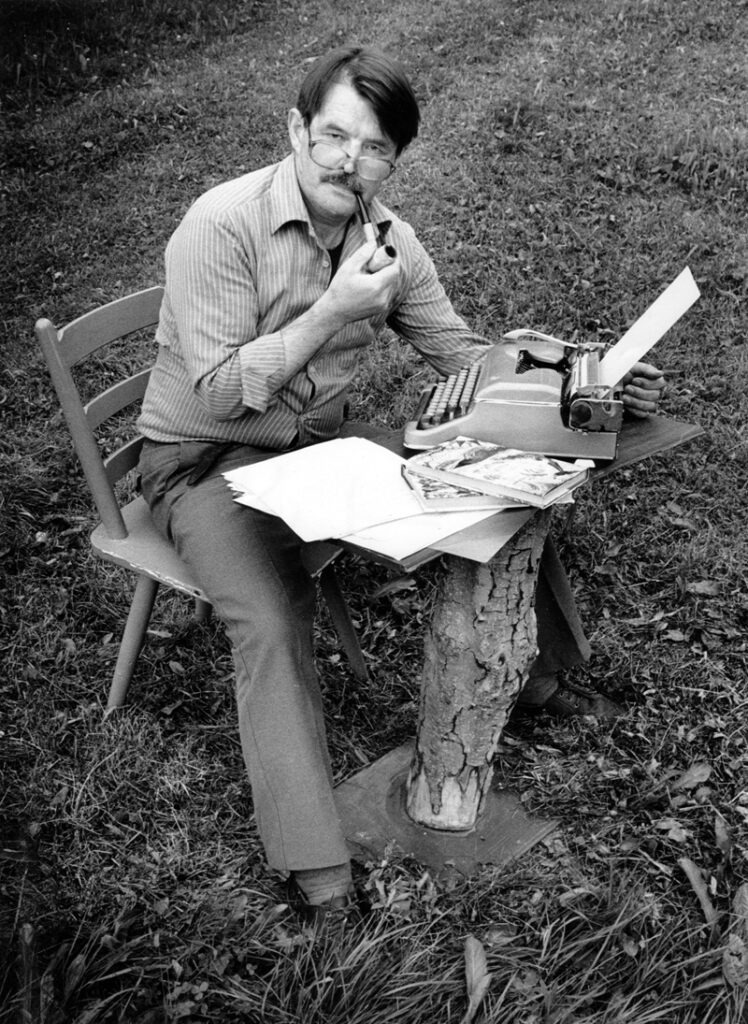
Idar Kristiansen from Kåfjord is characterised by Kven and Sami culture and a love of his home region.
Idar Kristiansen was born in 1932 in Honningsvåg. His parents were from North Troms. In 1942, his family fled the war along the coast of Finnmark to his father's home village of Manndalen. They lived here for two years before they had to evacuate again to Nordmøre in the autumn of 1944. He was the second child in a family of four. His father died in Nordmøre at Christmas 1945. In 1946, the family moved to Olderdalen. That same year, he started secondary school at Lyngseidet. He received a scholarship to study at Tromsø Teacher Training College (1949-1953), and he took an active part in the school's literary community. From 1953 to 1969, he worked as a teacher in many places around the country from «Vålerenga to Nordkapp».
Kristiansen worked as a freelance journalist for several newspapers and magazines, and he made a number of radio programmes for NRK (1968-77). In periods when he was not writing, he painted pictures. These were generously given away to family and friends as gifts.
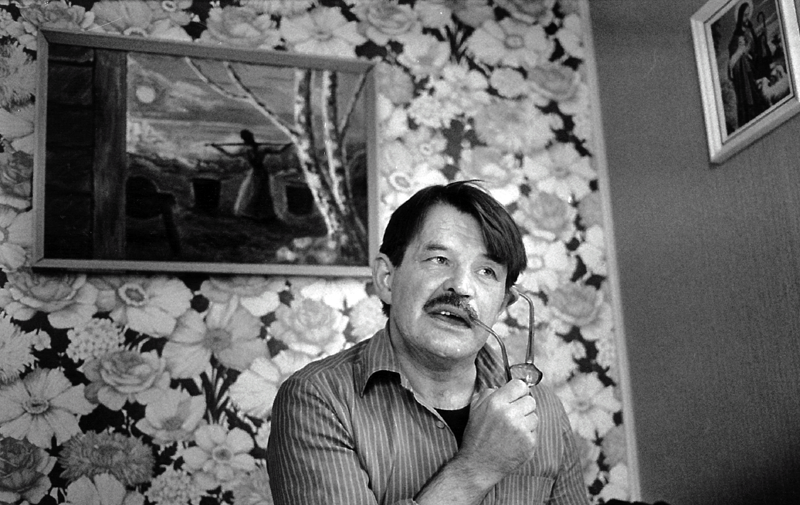
The author Idar
His debut book Songs from a tundra (1957) was well received by critics in the Norwegian press. The poems set the tone for his future writing, focussing on the nature, people and culture of the North Calotte. 1970 saw the publication of Crusade against Kautokeino, a documentary novel of the Sami rebellion against authority and social injustice. The rebellion culminated in a bloody religious showdown in Kautokeino in the autumn of 1852. The main work in Kristiansen's oeuvre is the novel series The grain and the fish in four volumes, based on the Finnish emigration to Finnmark and northern Troms in the latter half of the 19th century. The series aroused both great enthusiasm and intense debate in its time. For the first two books in the series - Swan wings in the north (1978) and The salty field (1979) - he was awarded the Aschehoug Prize in 1980 and in the same year he was nominated for the Nordic Council Literature Prize 1981 for The paths lead to the sea (1980).
The film Havlandet
He died in January 1985 before the film Havlandet (1985) was completed. The film is based on the first two books in The Grain and the Fishes and is directed by Lasse Glomm. The novel The valley of grace was published posthumously in 1985. The village depicted here is wartime Manndalen, and the book is inspired by Kristiansen's own childhood memories. The book was the first in an intended trilogy of novels - Nordfor Haltia - which was to depict the evacuation and rebuilding of North Troms.
Articles by and about Idar Kristiansen
Articles by Idar Kristiansen - Vi menn
Newspaper clippings - Idar Kristiansen - interviews, opinion pieces, reviews
Idar Kristiansen's contribution to Ordet magazine
Chronicles, poems, short stories, songs, plays
Current links
Digitally accessible books by Idar Kristiansen, National Library of Norway
Hear Idar Kristansen talk about Manndalen, National Library of Norway
Listen to Idar Kristiansen tell three stories, National Library of Norway
In the media
Honouring the multi-artist, Future in the North
Audio files, Short stories
Tar burning, 1977
Tuesday 22nd, 1968
Looking back on progress, 1969
Ghosts, 1968
Black year, 1969
About card games, 1968
Gossip, 1968
Good neighbours, 1968
Borderland, 1977
The fool who loved Northern Norway, 1977
Manndalen in Nord-Troms, Places in Norway
The Danes, 1969
Idar Kristiansen reads selected poems from Songs from a tundra and Everything you thought forgotten
You came to me in a dream, read by Jørn Ording, 1980
Here live my people, read by Stein Bjørn