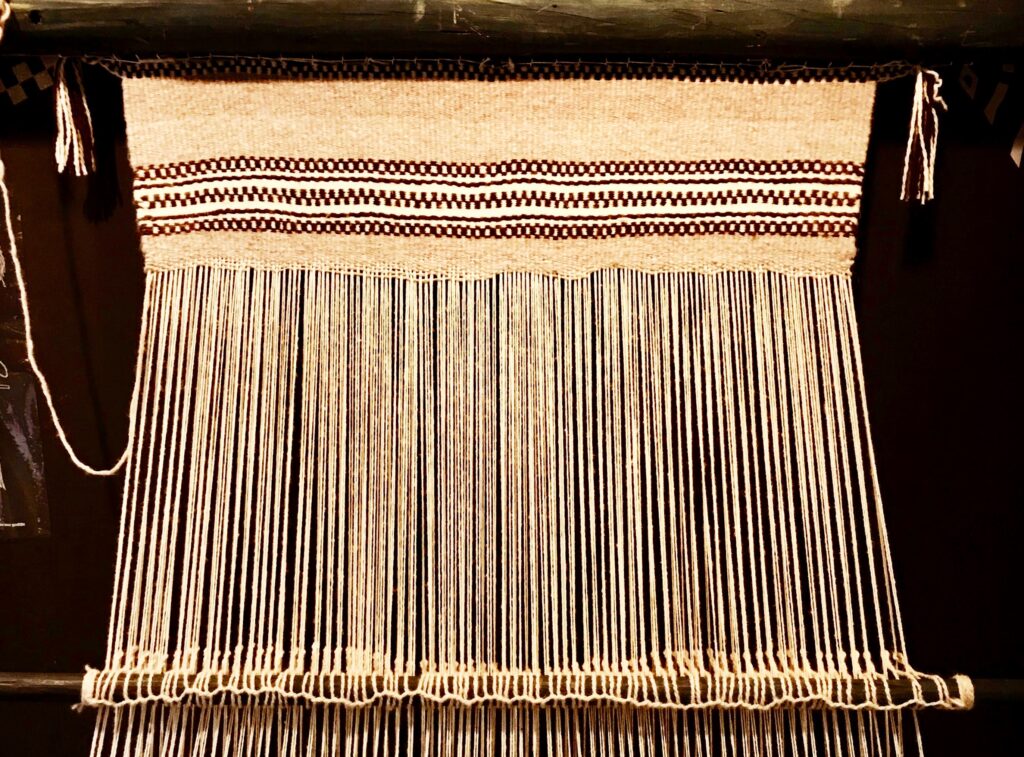
The natural household was based on small resources that were fully utilised. Rátnugođđin / branch weaving is a unique Sami duodji tradition with roots dating back to prehistoric times. Ránu / branches have for centuries been of great importance to the Sámi. Made from homespun wool, the branches are water-resistant and easy to use in all weathers. The migrating Sami who came down to the coast were important users. They bought and swapped branches from the resident Sami and used them as a bedspread to sleep under. It was used in the carriage of both the horse-drawn sleigh and the reindeer sleigh and packhorse. Branches that were beginning to wear out were sewn together to make winter tent canvas.
The weaving method is of great cultural and historical value. It can be traced far back in time, to ancient Greece and up to Denmark in the Bronze Age. In North Troms and Finnmark it has existed since prehistoric times.
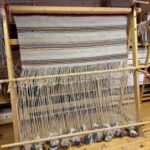
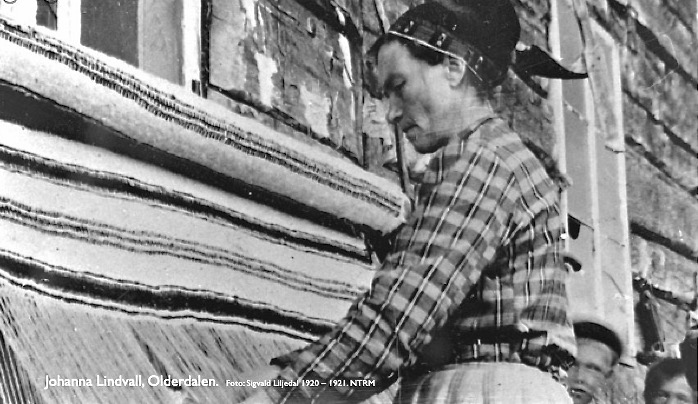
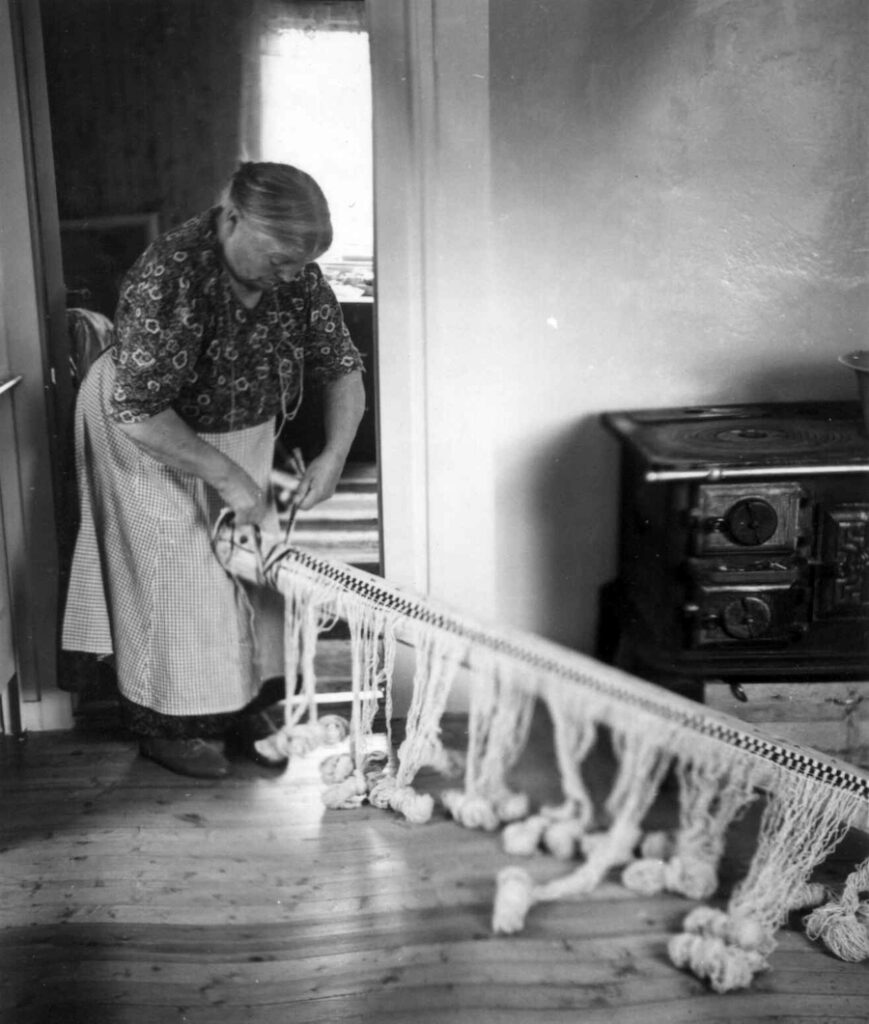
Rátnu / branches are woven on a simple backing loom, the rátnostuolet / branch loom, the várfi / warp is made by simultaneously weaving a selvedge that is sewn to the beam. Traditional branch weaving on a loom is still a living tradition in Olmmáivággi / Manndalen, but ránut / branches have been woven in the coastal areas of northern Troms and Finnmark up to the 1940s and 50s.
NF.1930-0122 Rátnu / branches
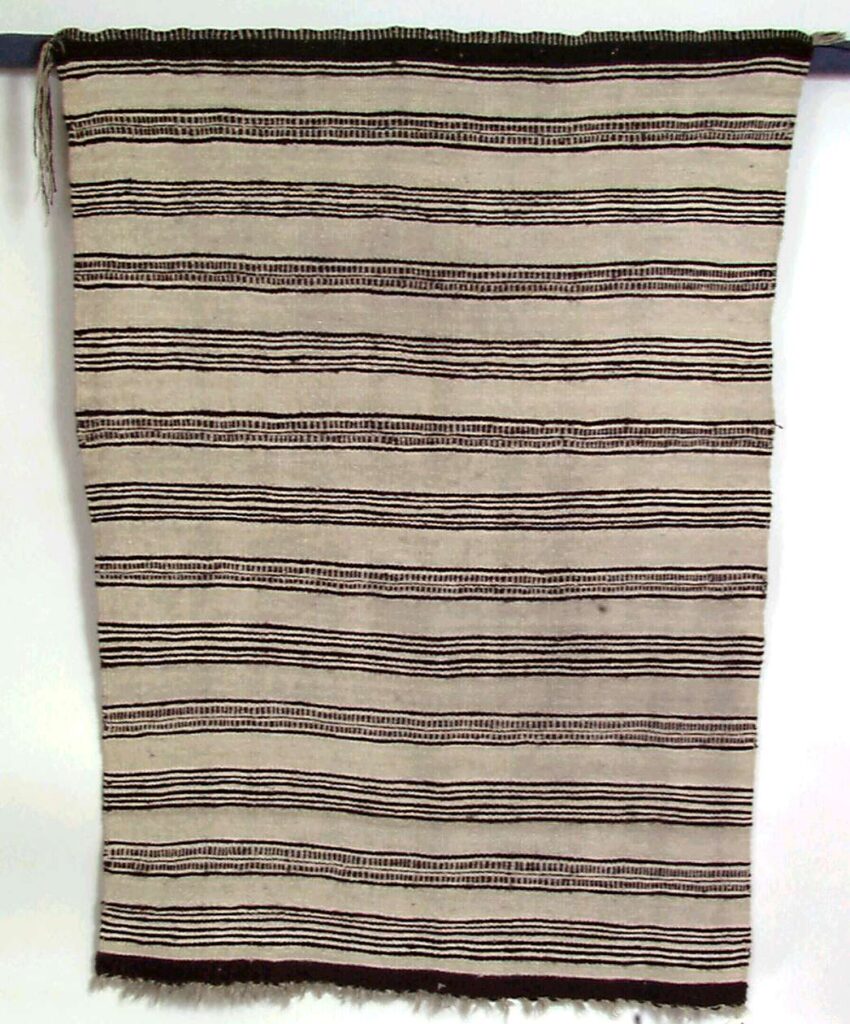
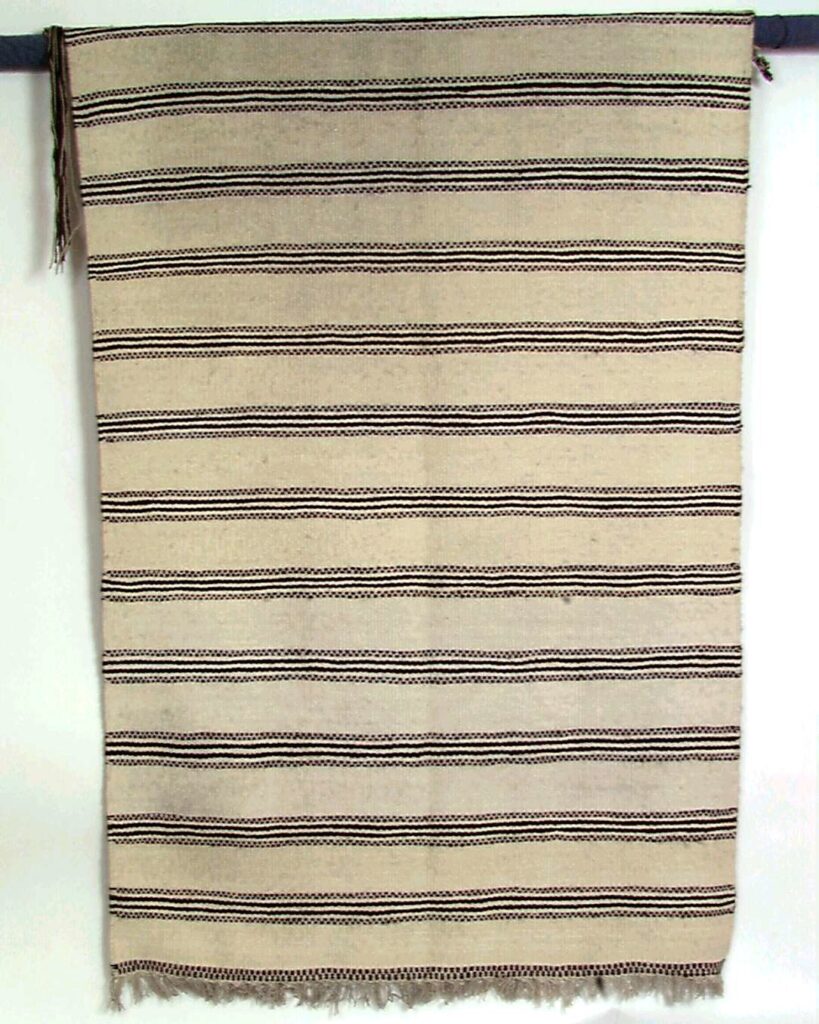
This is a rátnu / branches of older type. This type, with listo - wide, contrasting coloured stripes above and below, and alternating simple borders, was common before the war. The base colour is natural white with two types of alternating borders in natural black. Length 204 cm, width 143 cm (widest part). The branch was purchased in Dálošvággi / Olderdalen, Gáivuotna / Kåfjord from Alette Pedersen in 1930.
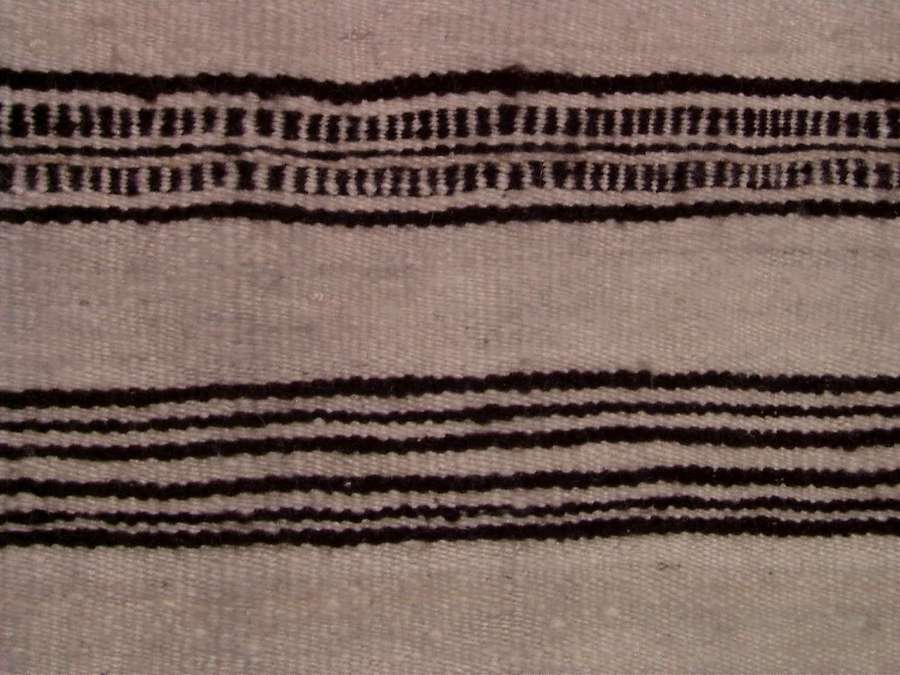
NFSA. 2734 Rátnu/ branches
Natural white rátnu/ branches of an older type from Gáivuotna / Kåfjord. The rátnu / branch is natural white with sheep black listo and a repeating pattern stripe. Length 192 cm, width 140 cm.
It was deposited from the University Ethnographic Museum in 1950, and found in the Norwegian Folk Museum's warehouse without a number in 1991.
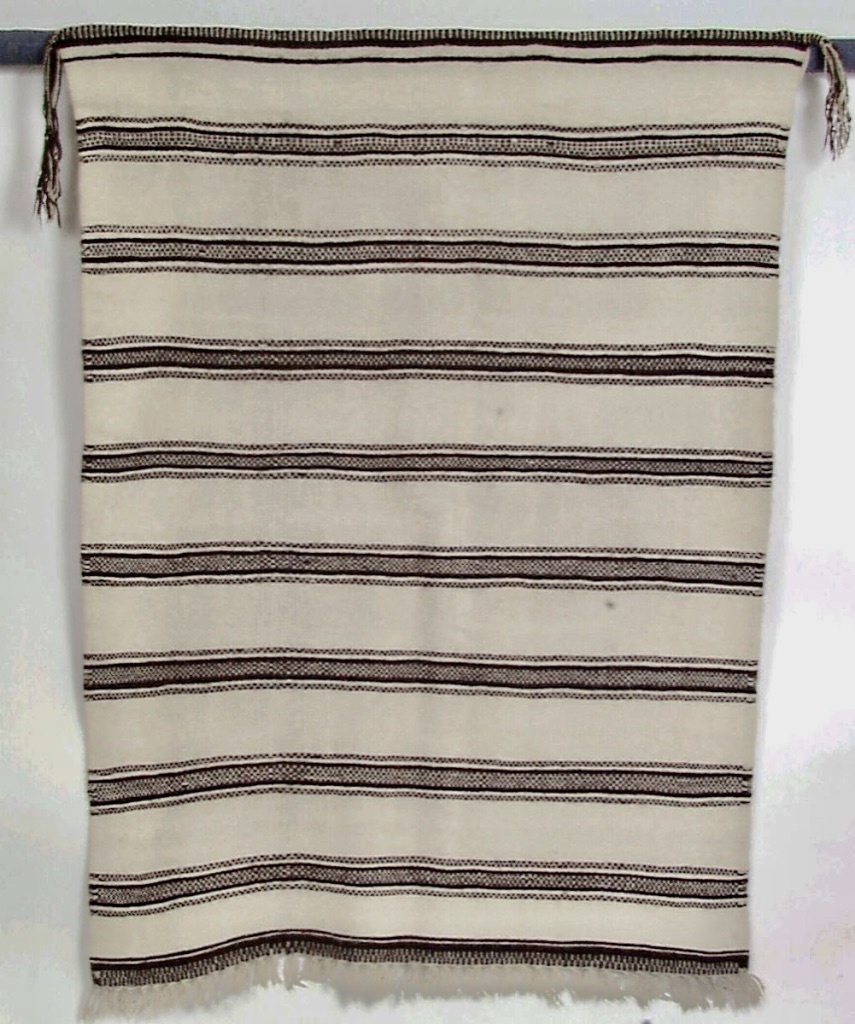
NFSA. 2733 Rátnu/ branches
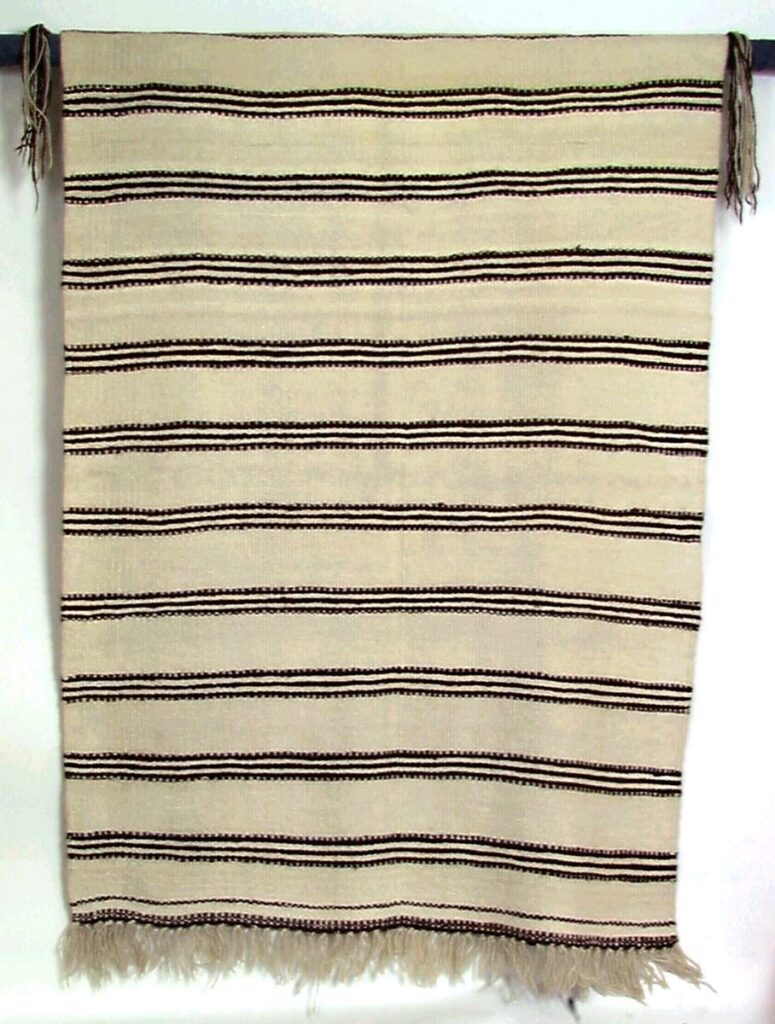
Rátnu/branch is an older type of branch with a traditional natural white base colour and a repeating pattern stripe in sheep black. The beginning and end of the branch are marked with simple stripes in black. NFSA. 2733 was purchased in Olmmáivággi / Manndalen, Gáivuotna / Kåfjord. It has been found without a number during cleaning in the carpet warehouse at the Norwegian Folk Museum. Catalogued accession 1800 - 1900.
NFSA. 3451 rátnu/ branches
Natural white rátnu / branches with repeating pattern border in sheep black from Olmmáivággi / Manndalen, Gáivuotna / Kåfjord. This branch is of a more standardised type, without listo and with wider stripes, which became more common from the 1950s. Purchased for the Norwegian Folk Museum in 1955.
Rátnu / grena is produced by Anne Hansen, Olmmáivággi / Manndalen, and is 220 cm long and 140 cm wide. The entire production of the grena, spinning, warping and weaving was documented, photographed and partly filmed by Marta Hoffmann in 1955. Hoffmann was a conservator and textile researcher at the Norwegian Folk Museum, specialising in handicrafts, textiles and textile manufacturing processes. She was involved in the revitalisation of the branch weaving tradition in Olmmáivággi / Manndalen after World War II.
NFSA. 3655 Rátnu / branches
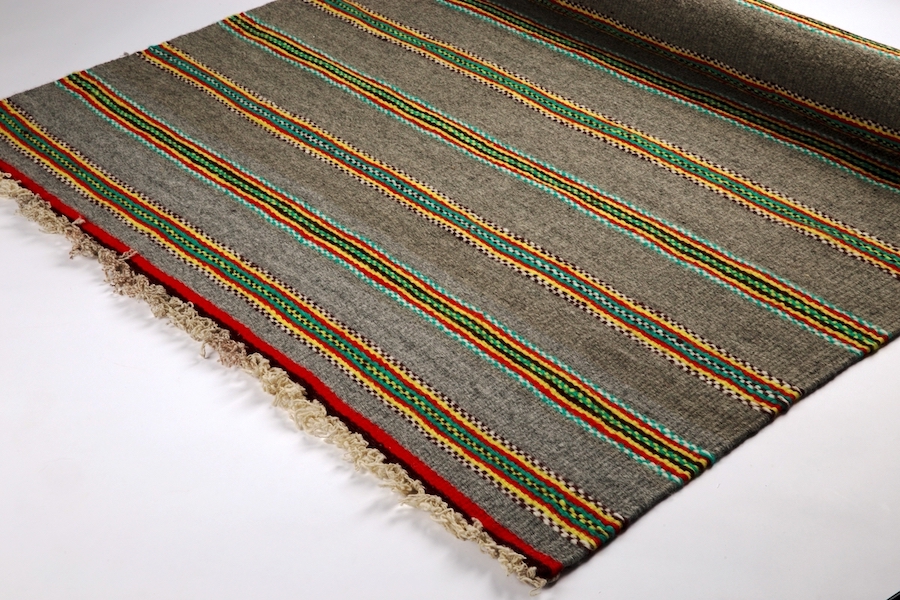
This rátnu / branch with colourful patterned stripes was made by Nils Oppervoll, Olmmáivággi / Manndalen, Gáivuotna / Kåfjord, 1958. The branch is made from natural and coloured homespun yarn and has a grey base and two alternating patterned stripes in black, white, red, yellow and turquoise. It has a red listu, wider stripes at the top and bottom. Length 2.10 metres and width 1.40 metres.
The Centre for Northern Peoples will get a copy of this branch.