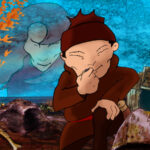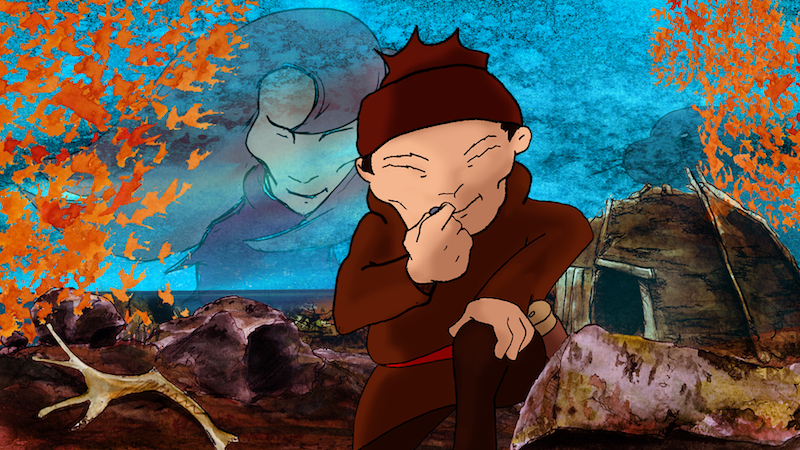
You can use the website to create educational programmes for kindergartens about the Sami song form joik. Through joik, children and staff gain insight into the Sami cultural world. The website and films are a collaboration between different professional environments.
Here is a recipe for how a joik workshop can be carried out using the films and information on the page.
Joikeverksted – the name we used for the gatherings we had along the way. "Verksted" is associated with activity, with something being worked on!
- Two groups of 5 children aged 3-6 years each.
- Meeting once a week. Important factor: the children will remember from one time to the next and be able to keep the thread.
- Each session lasts approx 20 mins.
- Talk about what the collections should be like for those participating.
- That it's important to concentrate – ”Konse”. That we must focus. Agreements with the children that we only speak Sámi during the gatherings.
- Clear day, time and place, especially at the start. Sitting in a circle on the floor allows for movement. Can be outdoors/in a lavvu.
- Staff put on their koftes at the start of each gathering. The children participate in dressing, discussions about headscarves, brooches, belts, how koftes should be worn, where they come from and what rules apply. This ties the cultural elements together and creates a shared focus.
- At the first gathering, the joiks that will be used are introduced. The staff had planned and controlled the content of the gathering. First, an adult joiker performs alone and tells the stories connected to the joik.
- Repetition is important. The joik is repeated with the children several times, pause, get the children involved little by little. Ensures that everyone learns the joik and can perform it in several ways.
- Play the joiker's games. Movement games that fit the content. For example, row Garralmahka's boat, fly like an eagle, etc.
- The children decide which joik should come first, whether they should joik loudly or quietly, and so on.
- ”Heads or tails” or ”spinning the bottle” are used to decide who gets to choose which joik is performed first and who starts the joiking.
- Used Lego bricks. Each child their colour, the adult had the same colours in ohca. The ”colour” the adult drew from their ohca gets to start/ choose a joik.
- Using silent microphones to learn how they are used, in pairs.
- Children choose a partner they want to perform a joik with
- The children also get to yoik alone for the rest of the group
- The session concludes with a drawing related to one of the joiks. Paper and coloured pencils must be laid out to avoid interruptions.
- Everyone has always yoiked every time.
Further into the project when the children had got well underway:
- moving the collections out to the goahti
- Sitting in a circle on the benches there
- A bonfire in winter, which the children helped to arrange and light.
- talking about which rules in Sami culture apply to the goahti
- Indoors, we have used sound systems, microphones, and instruments at gatherings and in everyday life.
Events in the nursery as they unfold
- presentation at a whole-school assembly for pupils and parents
- Christmas concert for parents in the departments
- Performance on February 6th for children and staff and some parents
What have the children learned through participating in the project?
- gained knowledge and experience with different types of joik
- Learned that joik can have many expressions
- learned that joik tells a story. The tone tells.
- Learned that joik, kofte, and goahti are symbols of Sámi culture
- Working with yoik for over a year has given the children ample opportunity for repetition and practice, and all of them have learned to yoik.
- The children have become confident in performing and presenting in front of the group. They sing and joik during the day.
- Work with words and expressions used in joiks and the symbolism
- The children often yoik in kindergarten and at home on their own initiative.
- Several of the children who have not participated in the project have learned to joik from the participants, even the very youngest.
- Learned to use the sound system and microphones, experienced that my own voice can be heard!
- Learned turn-taking rules
- Learned about the belonging of joik. That joik is connected to areas. That joik is different in different places.
For staff
- joik has become more prominent in everyday life
- learned several joiks
- I am joiking more by myself now in interaction with the children
- become more aware of the structure of joik in relation to text, grammar and tone
How the project is anchored in the Framework plan and subject areas:
Ethics, religion and philosophy
Cultural dissemination. The place of the joik in Sámi culture.
We need to create space for wonder, thinking, and conversations.
We want to ensure that boys and girls have equal participation in the project, and equal opportunities to be seen and heard. The project is gender-neutral, and equally relevant and interesting for both genders. The project will be led by both women and men. The theme will be training for children, especially boys, to articulate feelings conveyed through joik.
Art, culture and creativity
Music and movement, listening to music and joik.
Drama. Joik linked to fairy tales/stories.
Communication language and text
Learn to listen and communicate in Sami.
Practise language through the text in the yoik. Expand vocabulary.
Encourage the children to tell stories, to use language in a creative way.
Listening to sounds and rhythm in language.
The joik workshops will be used as language immersion.
Language stimulation will be an important part of the project. We have several children who are reluctant to speak Sámi. Working on the project will provide a good framework for the children's language development.
Nature, environment and technology
Using digital tools.
Nature from a Sami perspective. Yoik and natural phenomena.
Body, movement and health
Music and joik inspire movement and have a positive impact on physical and mental health.
Numbers, space, and shape
Gimle student nursery has been working with STEM subjects for several years and has good experience using mathematical concepts in their daily work.
Storytelling is something children are interested in and can be included in any activity. Location will be linked to the work with the Tromsø joik. Measurement will be linked to the work with sound.
Local environment and community
The place of the joik in the Sami environment.
”Tromsøjoiken” is about our area.
Personjoik
Harejoik
Mosquito eggs
Bear yoke