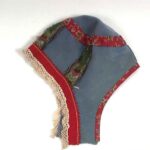
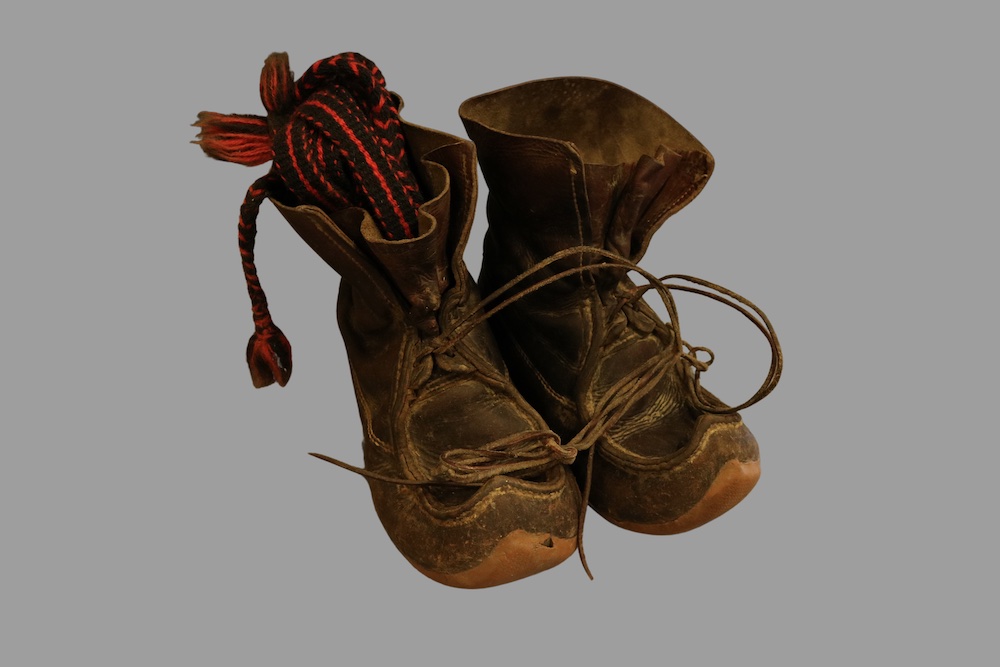
Komager - gámmagat was the most important traditional footwear in Nord-Troms right up until the 1950s. When the rubber boots and shoes took over, the knowledge of coma stitching also disappeared.
Second only to woollen mittens, the komager is the part of the traditional Sami costume that has been in use the longest. Up until the 1950s, it was common to see people wearing komager. It was particularly common to see komager for work or for school-age children.
Not everyone sewed komags themselves, but there were komag seamstresses around the villages, and some were regarded as very skilful. Komag sewing was an important source of income for duodji practitioners in earlier times.
Self-sufficient in leather
Most people in northern Troms had farms and were therefore self-sufficient in leather. Cow, ox or sausage skins, and sometimes sealskin, were used for the cowskins. If reindeer skins were to be used, they had to be obtained from the reindeer herders, as did sinew for thread. This was bought when the reindeer herders moved to the coast, or at markets such as in Skibotn.
Cowhide or oxhide was used for the cowhide sole, vuođđu. Leather from a two- or three-year-old bull was the best. Calfskin was preferred for children's comas because it was supposed to be softer. Sauk or reindeer skins were used for belaying, and eventually goat skins were also used.
A long process that follows the seasons
Leather tanning and komag sewing were carried out by the women. Making cowhides is a long process, and the work followed the seasons. In the autumn, the animals were slaughtered and the skins prepared. The animal to be used was skinned extra carefully. In early summer, the skins were laid out for dehairing, and bark was collected and dried. The process of dehairing, debarking and drying skins often took all summer. In late autumn, before Christmas, cowskins were sewn. Today, it is common to use waxed linen thread when sewing, but in the past reindeer tendons were used. In order to complete the tanning process, the finished komagas are greased with a mixture of tar and cod liver oil to make them waterproof. Freshly-lubricated cowhides can withstand all kinds of weather and were therefore excellent footwear in coastal areas, where the climate was humid in both summer and winter.
We only use them for fine wear nowadays, but in the past they were poor man's shoes, we had nothing else.
Oliva Nilsen, Manndalen
Men's cowhides were made from the best materials, because they were to be used a lot in the workplace and had to withstand more. Women's and children's cowhides were sewn from slightly thinner leather.
Filled with senna grass
To keep the warmth in the galoshes, they are filled with senna grass. After being dried and beaten, senna grass works in the same way as wool when it comes to insulation, keeping your feet both dry and warm. The grass was cut in late summer and stored in sacks throughout the winter. Every morning, the grass had to be sown, and in the evening the grass was taken out again to be dried.
Putting on a komage was called Čolčet. If a person had put on the komag bands neatly, they said don leat čolččas!
The komags are fastened with woven or braided komag bands. Traditionally, the colour of the band said something about the person, which varied from place to place. Now, multi-coloured bands are more common. It was important to put on the komags and the bands correctly, both because it had to look nice, but also because the komags had to sit well on the foot to prevent water and snow from getting in.
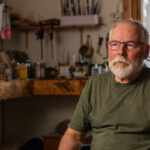
Harry Solhaug talks about coma grass, senna grass and coma grass walling, interviewed and filmed by Eirin Roseneng www.eirinroseneng.com
Watch the film about Oliva Nilsen from Manndalen who sews coma bags
A film by Reni Jasinski Wright and Irene Lum Asanji
Bus driver in komager, by Øyvind Rundberg, Kåfjord
Current links
The booklet Sea Sami clothing in old Lyngen
The fjord people in Kvænangen, Ivar Bjørklund, National Library of Norway
About the Sea Sami, National Library of Norway
Interview with Sámi woman from Manndalen 1975, National Library of Norway