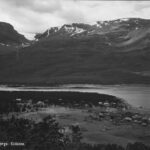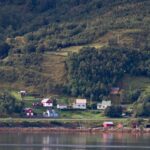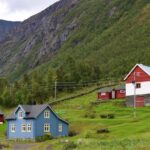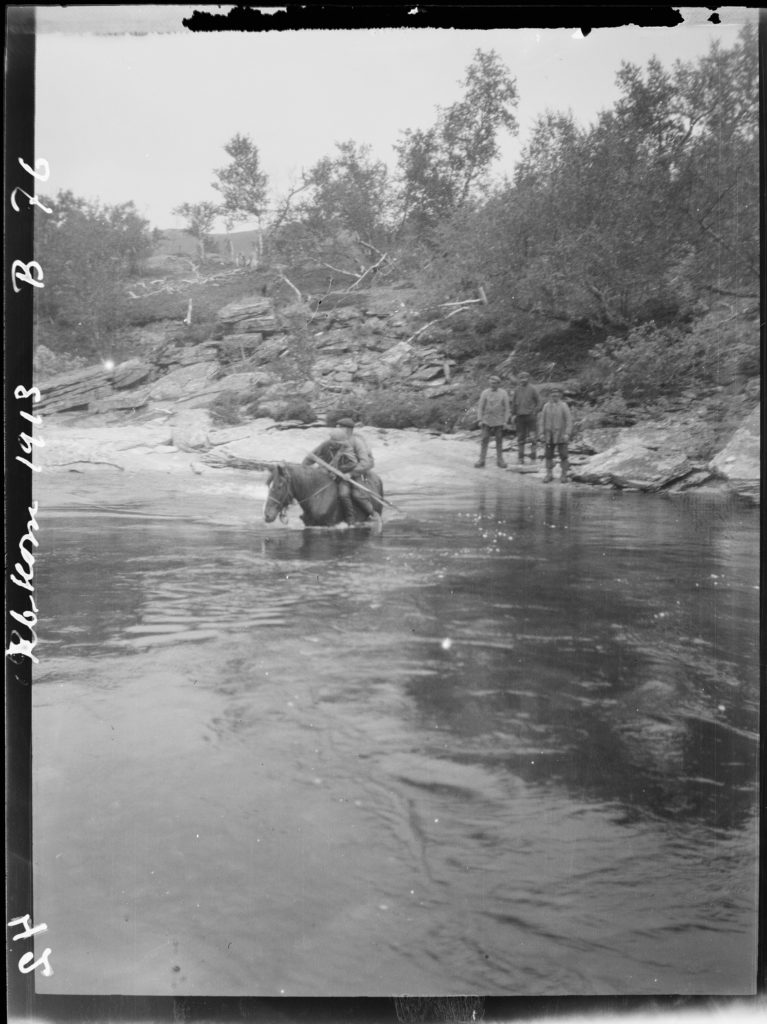
Prior to the 2019 Reindeer Grazing Convention, a commission was set up to investigate and regulate the boundaries for Sámi reindeer husbandry between Norway and Sweden. The commission conducted fieldwork in our areas in the summer of 1914 and 1915.
Background information
In 1751, the final border between Denmark-Norway and Sweden-Finland was established. Both states wanted clear boundaries, but at the same time they had to take into account the reindeer herding Sami who lived in the areas and engaged in seasonal migration with reindeer across the new border. To regulate conditions for the reindeer herding Sami, their right to use grazing on both sides of the border was recognised in the Lapp Codicil, where winter grazing was determined in Sweden and summer grazing in Norway.
The agricultural population in the north increased, especially in Troms. This led to increasing conflicts between farmers and reindeer herding Sami from Sweden. The authorities believed that reindeer herding should give way to agriculture, as the farming community was considered to be of greater importance to the country. In 1883, the Common Lapp Act was passed to regulate cross-border reindeer husbandry. During the same period, the process of Norwegianisation was intensified, and there was almost a consensus in the Storting to promote the policy of Norwegianisation from the end of the 19th century until World War II (Report. Truth and Reconciliation 2023).
After the dissolution of the union between Norway and Sweden in 1905, control over borders and natural resources became a symbol of national independence. Although the Joint Lapp Act of 1883 was still in force, the Norwegian authorities wanted to stop cross-border reindeer husbandry between Norway and Sweden. The Lapp Codicil could not be cancelled without it being replaced by a new law. During the Karlstad negotiations, the parties undertook to begin negotiations on a new convention. These negotiations began in 1913, and in 1919 the Reindeer Herding Convention was finalised. The convention restricted Swedish reindeer herders' access to Norwegian grazing areas and limited the traditional migration routes and grazing areas. This was part of a political objective to promote agricultural colonisation in Sápmi. The Reindeer Grazing Convention has been revised several times, including in 1972 and 2009.
Prior to the convention, a commission was set up to investigate and regulate the boundaries for Sami reindeer husbandry between Norway and Sweden. The commission carried out fieldwork in the area in the summer of 1914 and 1915. They documented and assessed grazing and snow conditions, migration routes, vegetation, as well as milking, calving and gathering sites. This work resulted in unique documentation of the landscape and natural resources and sheds light on issues that are still relevant today (Arkivverket.no).

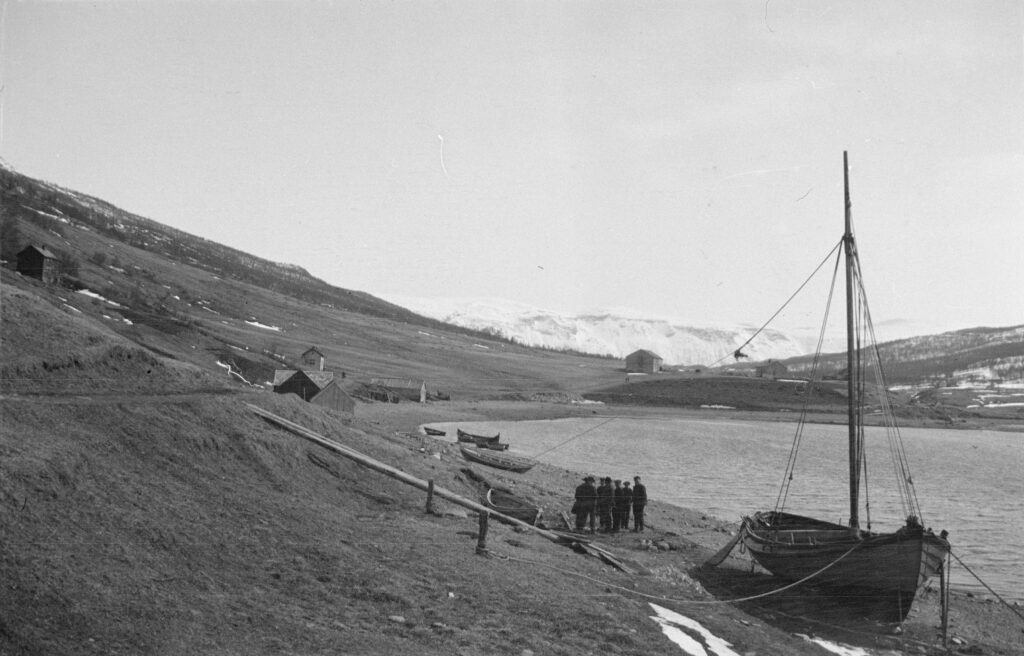


At that time, there weren't that many inhabitants in the valley.
The reports from the Reindeer Grazing Commission contain extensive information about migration routes and grazing conditions. The reports also contain interviews with permanent residents who talk about life in the villages and the relationship between reindeer herding Sami and permanent residents. The Commission is particularly interested in conflicts between permanent residents and reindeer herding Sami and whether the reindeer have caused damage to the permanent residents' meadows and outlying fields. The Felleslappeloven established reindeer grazing districts in Troms, and introduced provisions on the obligation to compensate farmers for damage caused by grazing reindeer.
Lars Pedersen Skogvold, Manndalen: As far as Skogvold knows, there have been no tariffs (fines) in the lower part of Manndalen. Only at the top of the outfields in Olmaivaggi
Hans Nils Larsen, Bentsjord: However, Bentsjord would prefer that the reindeer don't come any further down than the slope above the farm

Nils Henrik Tommasen, Abaja: The reindeer tend to come across the ice, sometimes right up to the enclosures. Sometimes they cause damage, but Tommasen hasn't offered to take valuations from the Sami. Only once has an appraisal been carried out at Falsnes by a farmer who is now dead.
(Quotes translated from Swedish to Norwegian)
We can see from the material that population growth in the villages has been high, and the establishment of farms and hayfields has driven the reindeer herding communities from their old grazing areas.
Erik Johnsen, Manndalen: As proof of the growth of the settlement in Manndalen, Johnsen mentioned that 50-60 years ago there were only 21 farms (in the village). Johnsen's farm, which belonged to his father at the time, was the top one. Above this was common property for the entire valley, and the hay fields existed all the way up to the mouth of Ápmelašvággi. There are now around 65 farms in the valley, and the hay meadows extend all the way up to the bottom of the main valley, over a mile above the mouth of Ápmelašvággi. There are now several farms above Johnsen, in addition to the few farms that are only inhabited in winter (such as Banol and others).
Aslak Andersen (1851-1933), Manndalen, also talks about population growth and which reindeer herders had summer grazing in the village.

Discussion with Aslak Andersen, 62 years old, born and raised at Samuelsberg, now owns the farm Fosslett (Fossvoll), Manndalen. He has 4 cows and 9-10 sheep, his horse died 2 years ago. He, and the other inhabitants of the village have fields on both sides of the river between Ruoto and Banol, he gets 16 winter loads of hay from these fields. When he was a child, «Tomma Nikolas» (Tomas Nilson Magga, Finland) moved to summer grazing at Nordnes. He was here for many years, at the same time as «Gustus». They arrived at St. Hans time and stayed until Mikaeli (around 29 September). Tomma Nikolas had a peat hut at the edge of the forest above Vatne, and he had milking fences. These Sami moved the reindeer back and forth between Nordnes and the upper forest in Manndalen and Ápmelašvággi and guarded the reindeer. Tomas and Gustus were both rich. In those days it wasn't a big deal, the reindeer could walk across the fields and if the people in the valley cooked a reindeer, it didn't matter. The Lapps often gave the inhabitants a fat reindeer as a token of friendship. At that time, there weren't many inhabitants in the valley, only 10 farms on the left side of the river and 11 on the right. The reindeer travelled on both sides of the valley, and sometimes reindeer were seen down in the valley. These reindeer owners later moved to Iddonjargga, as they thought it was better there.
After Tomma Nikolas and Gustus, Paulus Persen Bær (Kautokeino) came here. He had his reindeer in upper Manndalen and in Ápmelašvággi. Lived in the farms himself. He was very rich. After him came Aslak Jonson Baal («Smavvo», Kautokeino). He has been both at Nordnes and in Manndalen and Ápmelašvággi. In «Smavvo's» time, the town of Päiviö was also here.
The interview material shows that there have been close relationships between the villagers and the reindeer herding Sami. In Manndalen, relations have been so close that six of the villagers have warned the Reindeer Grazing Commission against making the position of the mountain Sami more difficult, as the residents benefit greatly from them. They argue that the reindeer do no harm in the village, and the annual migration of the reindeer herding communities from the Swedish side will be rendered impossible if the regulations are tightened. As we know from history, this objection was not upheld.

...within the reindeer's grazing areas, it is unfortunate that, as is now often the case, tariffs are paid
From the reindeer herders' point of view, we can see frustration that they were liable to pay compensation for the reindeer grazing on their former pastures, and that the work of guarding the herd and keeping it together had become more difficult.


Nils Josefsson Kuhminen belongs to Könkämä lappby and moves to the 6th district, aged 75. Kuhmuinen's village was located in Kummavuoma during the calving season, and Kuhmuinen had Lars Olsson Blind as a neighbour, belonging to the 8th district. In mid-June they separated their reindeer, and Kuhmuinen then travelled the usual route through Guovdavagge, Sørdalen and Kitdalen to the district, where he arrived about a week after midsummer. The reason for the late arrival was the lack of grazing in the district's right-hand tracts by that time. In the summer, the reindeer are not herded together, but the reindeer herders constantly had to go out and make sure that the reindeer herds did not wander into the residents' meadows. The Sami used to live in a valley called Juovagge (Stendal), where they had a summer settlement and a milking fence. But the area has now begun to be used as a hayfield for residents, as there are hayfields everywhere in the valleys, so it is no longer possible to keep the reindeer in a herd in the district. However, the reindeer still migrate to the area south of Lyngseidet. There have been no takings this year, only settlements for damage to meadows in a couple of places. Normally, there are tariffs for damage compensation on meadows every year. The cows consider it right that the Sámi compensate for damage that occurs on cultivated land and in the vicinity of inland fields, but on the outlying land up in the mountain valleys within the reindeer's grazing areas it is tedious to pay tariffs, as now often happens. Harbour entrance fees had never been charged before, and if the Sámi had to pay such fees here, they would not be able to live in this district, because the residents' cows go far up into the mountains and valleys, even beyond the forest boundary.


Reports with interviews from the Reinbeite Commission can be found on Umeå University's website: Search results | Digital collections
You can find all the images from the 1913 Reinbeite Commission on the digital archive's website: Historical photos - FotoWeb