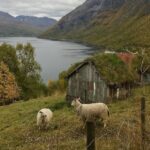
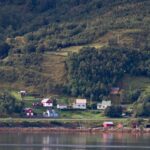
Skjervøy church is now a listed building and is the oldest preserved wooden church in Nord-Hålogaland. In earlier times, it was compulsory to visit the church, and people came travelling from surrounding fjords and islands. In this way, the church became a central gathering point, even outside of church services.
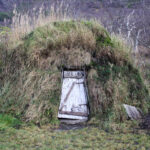
Skjervøy Church is now a listed building and is the oldest preserved wooden church in Nord-Hålogaland. It was in 1728 that Skjervøy church was completed for a congregation that would now consist not only of Norwegian coastal dwellers, but also of the numerous Sami and Kvens inland in Kvænangen, Nordreisa, Lyngen and Kåfjord. In older times, church attendance was compulsory, and absence from services was fined. People travelling long distances from inside the fjords and out on the islands stayed overnight in small church cottages on the beach below the church. In this way, the church became a central gathering point with village meetings out on the church hill, even outside the service. Laestadianism has had a major impact on shaping the cultural conditions in our region.
A social meeting place
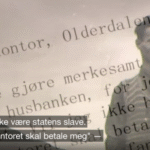
The gatherings have been an important social meeting place. Perhaps that's why the church on Skjervøy was chosen by the reindeer herding Sami from Kautokeino in 1851, where they disrupt the service? During a confirmation in 1852, a group of Sami Laestadians from Kautokeino had caused unrest in the church because they claimed that the priest did not adhere to the correct doctrine and demanded «a more intense confession and a more spartan way of life». This led to arrests and a trial in February 1852 in which 22 defendants were convicted. All those convicted were also held financially responsible for the trial, which led to direct financial ruin for many. Many believe this was the prelude to the famous Kautekeino rebellion in Finnmark.