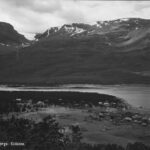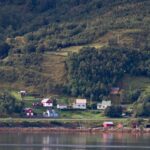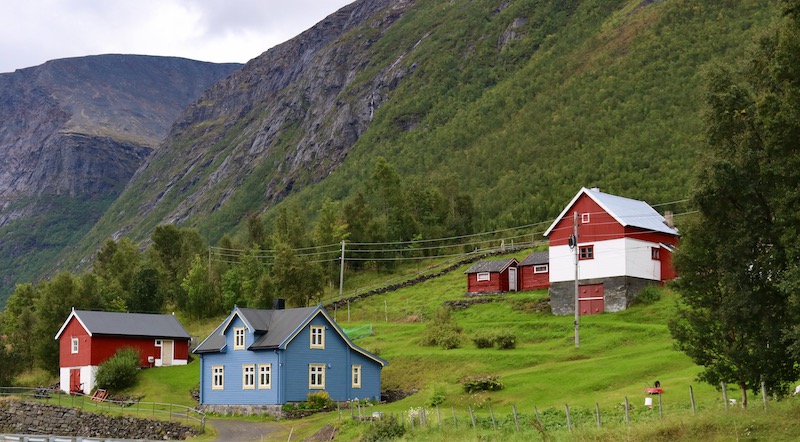
Skárfvaggi / Skardalen is a small Sea Sámi fjord village in Kåfjord in Troms. The area, which is beautifully situated between steep mountains, is home to a wealth of stories and cultural artefacts from different eras. In 2009, the village was selected as a national cultural landscape in agriculture.
The Sami word for the village Skárfvaggi probably comes from the word skárfa, which is the Norwegian term for the seabird cormorant.
The Sami, Kvens and Norwegians have all lived in the area, and the Sami population can be traced as far back as there are written sources.
The combination of farming and fishing has been the most important livelihood for people in Skardalen. All households had their own boat and boathouse/boathouse, fishing hut and access to the resources in the fjord. Fishing was carried out using nets, lines and seines. In earlier times, the men in the village participated in seasonal fishing in Finnmark and Lofoten, and were therefore away for much of the year. In addition to other work on the farm, fjord fishing was therefore important work for the women and children.

All households previously had a boathouse. After the war, these were replaced with boathouses. Two boathouses have been rebuilt in connection with Kulturlandskap Skardalen, and more are planned. Today, few people engage in full-time fishing. The boats are used for recreational fishing or tourism.
Traditional forms of operation
The buildings in Skardalen are located on terraces in a very steep terrain. This made it difficult to use machinery in agriculture, and the old forms of farming are still in use.
As a selected cultural landscape in agriculture, the village receives funding to mow the old ramparts and keep them in good condition. Most of them are mown with scythes, but some are mown with light mowers. Every summer, a group of young people come to Skardalen to work on the mowing.
Only a few houses and buildings were spared when the village fell victim to the Germans during the Second World War. The village is therefore characterised, as elsewhere in Nord-Troms, by post-war buildings.
Most of the buildings in Skardalen are well preserved. The properties are long and narrow, stretching from the shore up to the high mountains. The houses are attached to boathouses, sea arches, huts and haylofts in the fjord zone, while barns and haylofts stand in rows on the upper side. Summer barns and hay barns are located in the forest hollows, which everyone had in the past. Since Skardalen was designated a national cultural landscape in Troms in 2009, many of the old buildings have been renovated or rebuilt. One of the barns has been converted into a small farm museum, where people can gather for meetings or other events. The village is frequently visited by students from home and abroad, and others come for birthday celebrations and/or cultural walks.

A small blue house by the roadside is believed to have been built somewhere between 1675-1699. The house, which was moved to Skaradalen from Nordreisa in 1906, was used by the Germans during the war. Along with two timber-framed arches and a hayloft, the house is automatically protected due to its age.
The small village was without road access until 1960. Before that, there was only Riksvei 50, also called love path which linked Skardalen to the neighbouring village of Manndalen. The name is derived from the fact that boys from Manndalen proposed to girls in Skardalen along this road. Many also found wives from the village. Many a couple of sweethearts have probably walked hand in hand along Riksvei 50.
When the E6 motorway was laid through the village so close to the shore, many of the traditional boat ponds disappeared, as did their remains.
The entire property, from the shoreline to far up the mountainside, was previously used for haymaking and grazing for cattle, sheep, goats and horses. Today, most of it is abandoned, and primeval forest has taken over the areas above the buildings. The land around the houses and some way up the valley side is mown and hayed in the old way. Today there is some wild sheep farming in Skardalen, and around 1,000 sheep from the neighbouring village of Manndalen graze here.
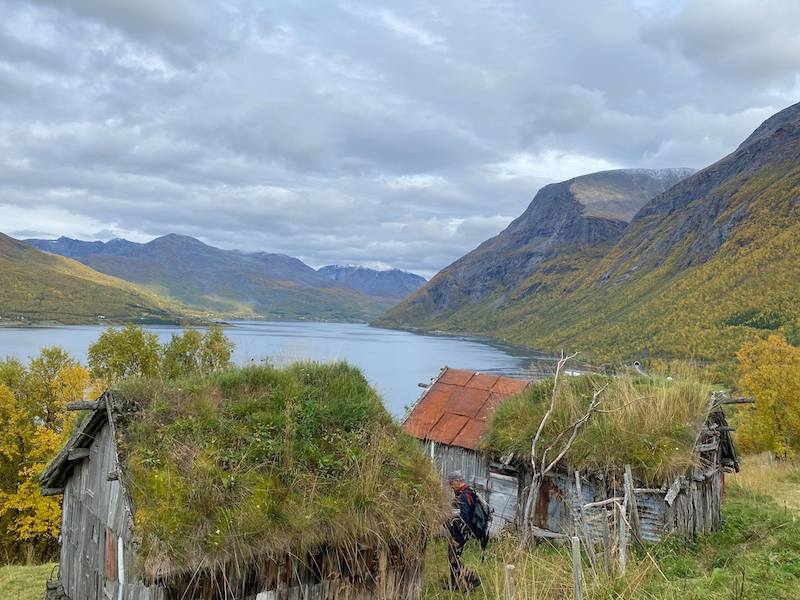
They all had summer barns and haylofts, many of which were built using materials they had to hand. The use of boat tables, fishing crates and oil drums, in addition to birch and alder, testifies to great ingenuity.
Summer accommodation at Badjegieddi
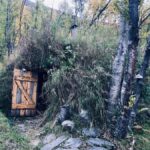
The remains of dwelling pits and barn pits at Badjegieddi tell of a time when people and animals inhabited the area.
Until the 1930s, the reindeer herders had summer settlements in the valley. The villagers and the reindeer herders worked closely together (verddevuohta). The verddevuohta families fed the migrant Sami's goats over the winter and also contributed woollen clothing and fish in exchange for meat, sinew and skins.

Sami place names
There are several hundred Sami place names in Skardalen, but only a few have parallel Norwegian names. Stones and mounds were given their own names, which can either tell us about the Sami way of life, who the owners were or what happened in the village.
Jámesgušbákti in Norwegian, Dauingberget, tells the story of when a corpse on a stretcher was placed under the mountain when a funeral procession was surprised by a storm. The dead were then taken by boat to Lyngseidet, where they were buried. Jollageađgi is a rock at the floodplain that resembles a dinghy. On the Márgihaskoarru / Margitskaret, a woman called Margit had a mowing space.
Read more about place names in Skardalen, Skardalen.com

Mythical landscape and sacrificial stone
Many stories and legends are linked to the landscape in Skardalen. There are tales of draug, utbyrd, sea trolls, huldra, bears and hidden treasures.
A little way into the valley lies the Sami sacrificial stone (sieidi). Nissonašgállu which in Norwegian means woman's forehead. Seen from a different angle, the stone can look like a head wearing a hat. Siedidien is eight metres high and contains a small chamber that the local people refer to as árdahávdi, i.e. a treasure hiding place. Among other things, coins from the 17th century have been found near the stone. The people of the village would never think of taking anything from or defacing the stone as, according to a local legend, it would fall on anyone who tried to do so. In the 1970s, the hiding place is said to have been looted.