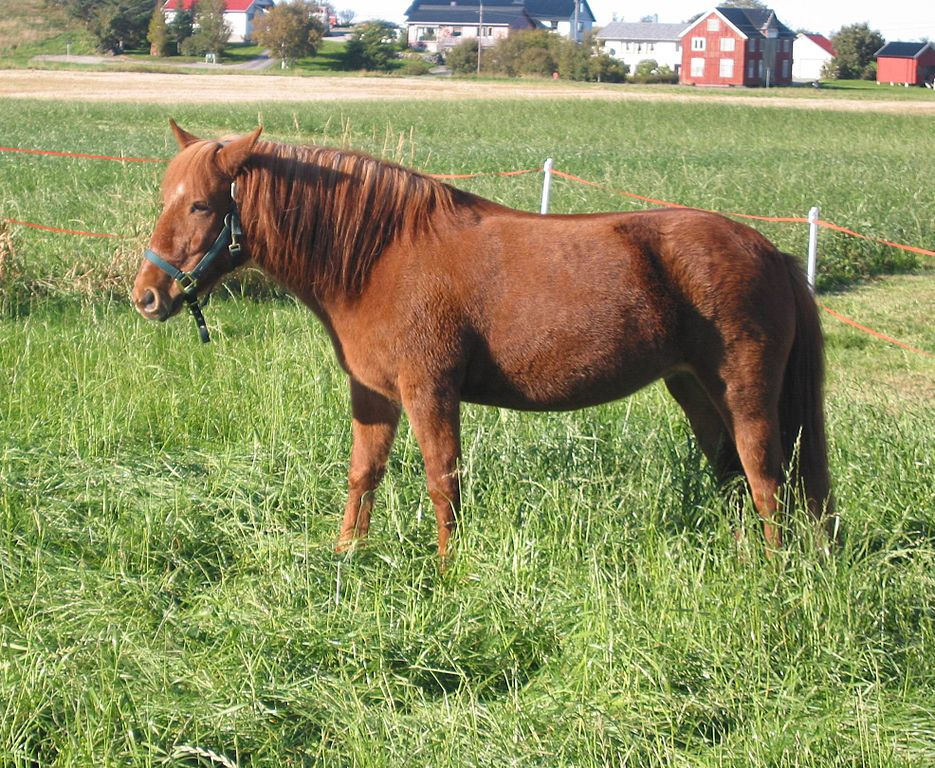
For generations, the heather horse has been an important part of folk life and culture in the north. In the many Sea Sami and Kven villages, this elegant, tough and strong little horse has been a highly valued workhorse for generations.
The Lyngshesten, also known as the Nordlandshest, is one of the three national Norwegian breeds with very ancient origins. In terms of size, it is the smallest of the breeds, which otherwise include the Dølahest and Fjording. The horse has roots from the old North Norwegian horses that lived around the Lyngenfjord, which is why it was named Lyngshest.
Little is known about the origins of the Lyngshesten, but it is fairly clear that the breed comes from the east, through Russia, and perhaps all the way from Asia. Myths say that it was a branch of this horse breed that Genghis Khan and his men used in the 12th-13th centuries.
Strong and good temperament
At around 130 centimetres tall, the Lyngshesten was considered a pony class horse. This also meant that for a long time, the horse was seen as an inferior breed. It was precisely the horse's size, strength and, not least, its good temperament that made it so well suited to the small farms around the Lyngenfjord. The horse was used for work on the farm and also for driving and riding. The horse's size made it easy to handle, while at the same time it did the same work as a large horse. The good quality of the horse meant that the foals were often used as a means of exchange at the Skibotn market.
Close to extinction
By the end of the 1930s, the horse was threatened with extinction and organised breeding of the breed was initiated. Troms Landbruksselskap bought the stallion Rimfakse, which was placed in Lyngen, where they had the largest number of purebred mares. Only a small number of horses survived the Second World War, and when the tractor took over the horse's work on farms in the 1960s, the situation was precarious for the breed.
Targeted breeding efforts initiated by horse organisations in Troms and Nordland have meant that the horse is no longer on the verge of extinction. The horse is nevertheless included on the FAO's list of endangered breeds with the status «endangered - maintained» (FAO, 2000).
Veterinarian Geirmund Vik from Nordreisa, Norway, has spent his entire adult life preserving and creating interest in the Lyngshesten. For this work, he was awarded the King's Medal of Merit in 2016. The medal was awarded during the Riddu Riđđu festival 2016.
Video: Geirmund Vik talks about Lyngshesten and other stories from North Troms
Film: Leif Larsen - Stories about the heather horse
Leif Larsen grew up on a farm at Lyngseidet with heather horses and sheep. At a very young age, he was involved in founding the association for heather horses in Troms in 1946. Leif was passionate about heather horses and breeding until he died in 2009. He was committed and more than usually interested in horses and sheep and had a very special ability to describe and memorise animals - which must have contributed to the very good results he had as a breeder. There have been close to ten first prize-winning individuals from his breeding programme - and several that have also won first prize for offspring. Leif Larsen was essential to the survival of the heather horse in Troms.
Sources and relevant links
Lyngshesten, Elling Vatne, National Library of Norway
Nordlandshest/Lyngshest, National Library of Norway
Rimfakse.no, Nordlandhest/Lynsghest
Articles
Has lived his life for Lyngshesten - now he has received the King's Medal of Merit, NRK