Goji berries, beef tomatoes and wild plants
The world's best beefsteak tomatoes and antioxidant-packed goji berries are grown here. Basil, chilli and tomatoes in all varieties. Through 34 years of organic herb farming at Nordnes in Kåfjord, Tom Lien has an inexhaustible amount of knowledge about useful plants from all over the world.
Text and photos: Torun O. Wernberg
Published 23 June 2020
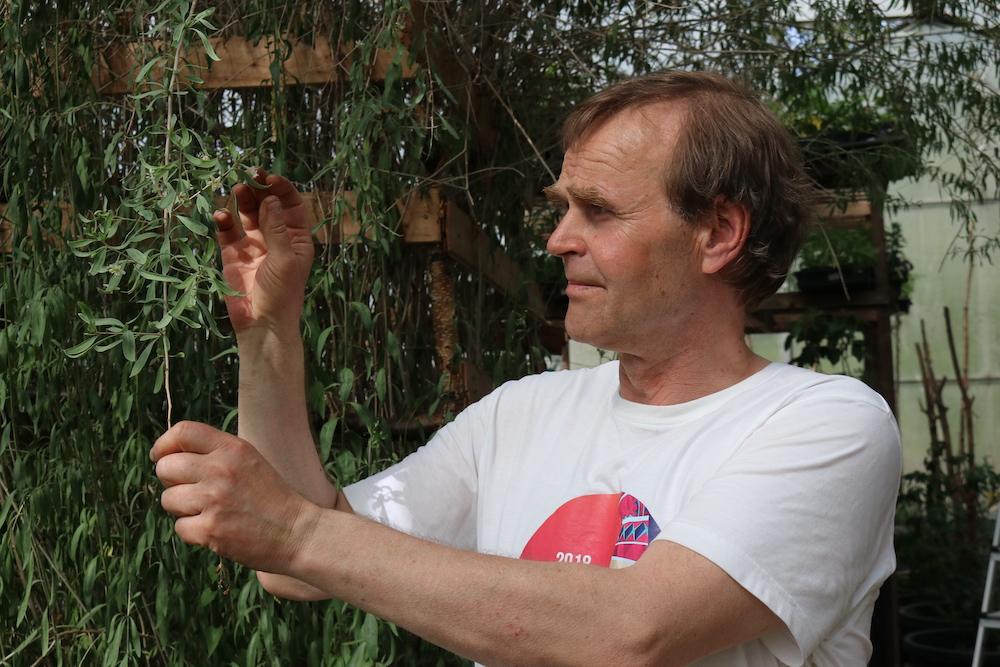
– I have often wondered why we can't get more out of the natural resources up here. We could create more jobs, believes Tom Lien, who runs Lien Organic Herb Garden.
Tom Lien knows what he's talking about. For 34 years, he has not only made plants from all corners of the world thrive here, but has also brought forth old and new knowledge about the use of plants and herbs that grow wild in our nature.
When he and Linda Aarøen took over the farm, which had been in the Lien family for generations, the land had lain fallow since 1962. The couple decided to rebuild it based on eco-philosophical principles. They had a particular desire to emphasise the old farming methods, but also to find new ways to utilise them.
– Over the years, we’ve been involved in lots of different things here. My biggest interest has been in useful plants. Organic cultivation of herbs, vegetables, and further processing of these plants, but also gathering wild plants and further processing wild plants, herbs, berries, and mushrooms, says Tom.
Previously, the couple also had animals, including wild sheep, the old Norwegian goose breed, Angora rabbits and bees. A few years ago, he chose to go all in on utility plants. Tom estimates that he has between 150 and 200 different herbs from all over the world on the farm, which can be used for food, medicine and cosmetics.
– We have a nursery and a small processing facility. In addition, I forage a lot of wild plants every year which I use in production in the same way. We have a large range of products such as spice blends, teas, herbal salts, oils, vinegars, sweets, and creams, says Tom.
Out of my mind
Tom also has a special interest in antique vegetables, old vegetable varieties that have been forgotten.
– Many of the old heritage varieties are also the most nutritious and flavourful. They might not fit into the modern food industry, but it’s great that many of these plants are having a renaissance. It’s precisely the same principle as with old breeds of domestic animals. You had domestic animals that were much better suited to the region they were in. It’s exactly the same with plants. For example, in earlier times in the 1800s, grain was grown all over Northern Norway, particularly barley, but also oats and different varieties of rye. That tradition completely disappeared decades ago. The same applies to vegetable varieties and, not least, the use of wild herbs, says Tom.
It's as if we have a lost generation. Previously, there was extensive use of herbs for both food and medicine. But then came the modern era, and sadly, a lot of that knowledge was forgotten. But then I've seen a big renewed interest in the last 20 years. It's very pleasing.
A resourceful area
Tom has wondered why we buy large quantities of wild herbs through pharmacies. These are imported from, among other places, former East Germany and Poland, and many of the most polluted areas in Europe. At the same time, we have enormous amounts growing right outside our front doors.
– There are herbs like yarrow, horsetail and nettles, which just grow on the outside and are of a much, much better quality. We live in the middle of a resource-rich area, says Tom.
Tom thinks back to the 80s and 90s when tourists from Germany and France, among other places, arrived in their campervans, believing they had found a mushroom paradise.
– There were mushrooms hanging everywhere. There are big opportunities right there. 95-99 percent of wild berries rot in our forests every year. You go to health food shops and buy dried blueberries for 3000 kroner a kilo, or you go to the local shop and buy a small bag of juniper berries for 40 kroner a kilo, and they are growing 20 metres from your front door. There are many such paradoxes. If you go out foraging yourself, you get the nice walk in the countryside as a bonus, says Tom.
More and more young people are also becoming interested in this. But I've discussed with young people who go to the corner shop and buy those artificially fertilised blueberries for twenty pounds a pack, and then something much, much better, of a much better quality, grows a short quarter of an hour's walk from the front door. Then I usually say: get yourself out the door.
The world's best beef tomato and immortality berry
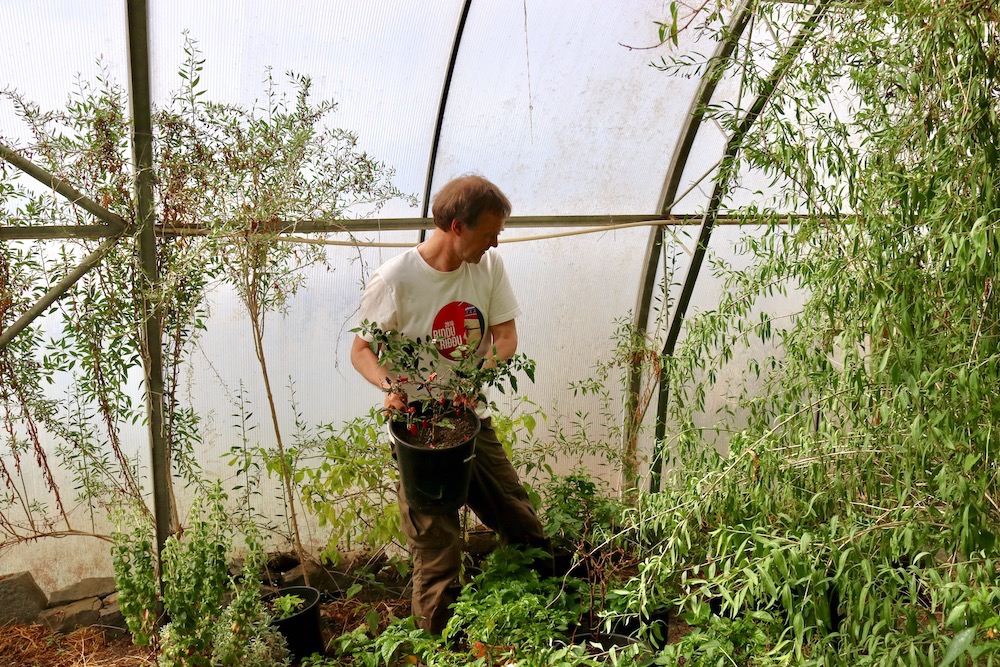
In the greenhouse, Tom has, among other things, a famous variety of tomato called Brandywine, which was bred by the Amish people in the USA in the 19th century. It is considered by many to be the world's best beefsteak tomato.
Here grows a large goji bush, originally from Northern China, where it has been used for many thousands of years. The berries went by the name immortality berry previously, as they are packed with vitamins and minerals.
– This is superfood. Packed with antioxidants. In the best years, I've gathered kilos of berries from this bush, says Tom.
Tom is pleased that more and more people are opening their eyes to useful plants, reviving old knowledge and thinking of new ways to run businesses. He himself travels the country giving courses to people on the cultivation and use of useful plants.
– There are two important things concerning the primary industries up here. You have much greater opportunities today when it comes to combined industries. In earlier times, you had traditional agriculture, fishing, and forestry. Now, you can combine them in all sorts of ways. And then there's further processing: creating value in the local environment, further processing it, and selling finished goods, rather than just being a raw material supplier. That's perhaps the most important thing, believes Tom.
More about Lien Organic Herb Garden
Link Ecological Herb Garden on Facebook
Preservation and Innovation, Pure Food, 2020
Urtegården at Nordnes, Framtid i nord 2002, Norwegian Bokmål