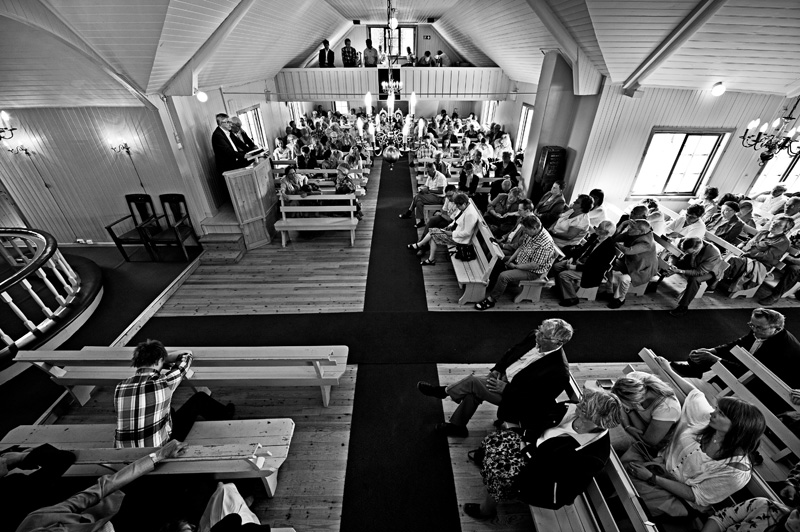
Laestadianism is the Christian revivalist movement that has had the greatest influence on the population in the region. The revivalist movement came to Norway in the 1840s with the reindeer herding Sami who had summer grazing on the coast and with the Kven immigration.
The founder of Laestadianism, the Swedish-Sami priest Lars Levi Laestadius, interpreted the biblical message directly into a Sami perception of nature and reality. In this way, he was able to link the people's everyday life and traditions with Christian faith.
For a long time, the Sami and Kvens of North Troms had been subjected to both economic and cultural oppression. The policy of Norwegianisation had left deep scars, and economically there was a great distance between the Sami and the Kvens on the one hand and the Norwegian officials and traders on the other. Læstadius was in favour of the Sami language and culture, and he believed, among other things, that the priests and authorities should know Sami. He realised that alcoholism was the cause of social hardship among the Sami and chastised the church for its lifestyle and drunkenness. In order to be converted, it was necessary to change the way of life.
Frugality and absolution
The way of life is important for a believing Laestadian. He warned against allowing oneself to be influenced too much by secular society, and Læstadius made frugality a central virtue. One should protect one's faith by building a «fence» around one's Christian life.
Sin and forgiveness are central to Læstadius' teachings. By recognising one's sinful nature and coming to terms with it (penance), you can receive absolution from a fellow Christian. The Laestadian gatherings were characterised by emotional outbursts and unity.
Disagreements and divisions have meant that today there are many branches of Laestadianism. On the Norwegian side, there are three main branches:
- Firstborns centred in Ofoten and Lofoten
- Lyngen direction with centre of gravity in Nord-Troms (two fractions)
- Alta direction with centre of gravity in Western Finnmark
Erik Johnsen
In Nord-Troms, the Laestadians gathered at Skibotn markets and in smaller gatherings in private homes. Preacher Erik Johnsen (1842-1941) from Kåfjord became an important communicator of the message of Laestadianism around 1900. Johnsen was in close contact with Laestadian congregations in northern Sweden, but gradually developed a different view on a number of key doctrinal issues. It was particularly in his view of baptism and church structure that his views differed from the other Laestadian movements. He emphasised the necessity of infant baptism, and through this view he developed a closer relationship with the Church of Norway than the other Laestadian movements.
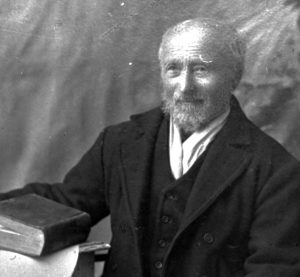
Johnsen is referred to as the undisputed leader and mentor of the Laestadian revival in Lyngen, known as the Lyngen movement.
Film: Small birds and everlasting flowers
More about Laestadianism
Watch the programme Ilden fra Sinai - Den læstadianske vekkelse på Nordkalotten, NRK
Laestadianism: emergence and spread, Roald E. Kristansen
Laestadian factions and movements, Kven Institute
Division and unity in Læstadius' footsteps, Seen from the north
The Kautokeino Rebellion of 1852 and Laestadianism; NRK 1977
At a læstadianerstevne in Skibotn, National Library of Norway
Læstadianism, Nord-Troms museum
Home baptisms and Christmas trees in Manndalen, forskning.no
About being a Laestadian youth, Troms County
Living Laestadianism, Hans Nic Nilsen, Yearbook for Nord-Troms
The living Læstadius, Carl Johan Bentsen, Årbok for Nord-Troms