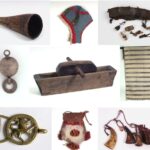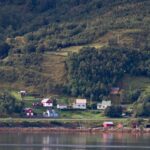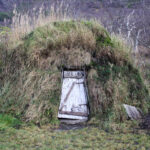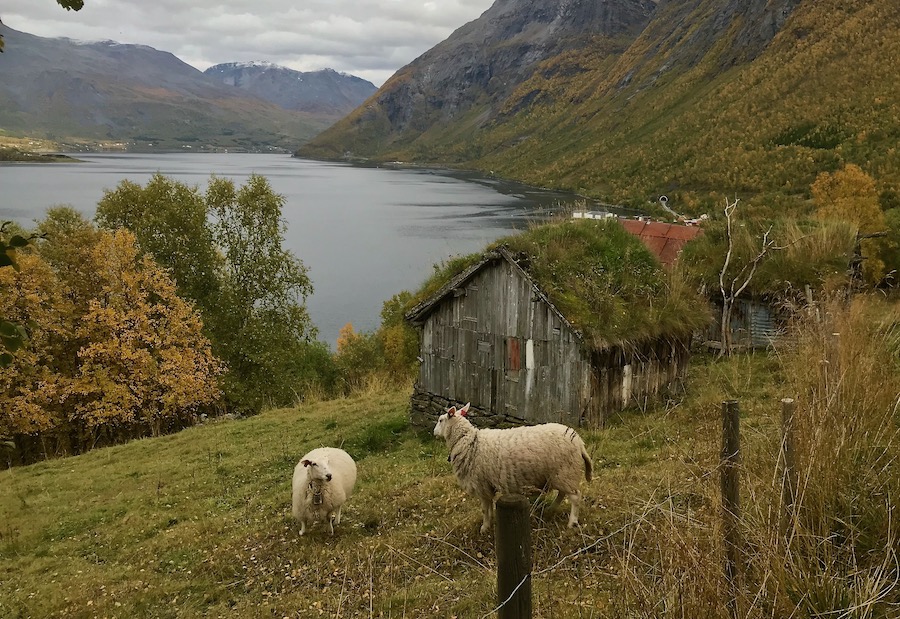
The combination of animal husbandry and fishing characterised the Sea Sami areas for hundreds of years. The families were self-sufficient in what nature had to offer from the sea, the land and the countryside.
An ordinary farm might have a couple of cows and a dozen sheep, and some also had a goat or two. This, combined with fishing, was enough to meet the needs of the household.
A prerequisite for keeping livestock was to engage in fishing on the side. At the centre of the industry was the cooking pot. Here, fodder was cooked for the livestock from food and plants from the sea and the countryside. This kept the animals alive throughout the year.
The whole family participated in the work on the farm, but the roles were clear. The women ran the farm, took care of the children, cooking, housekeeping and handicrafts, while the men were responsible for fishing, hunting, firewood, slaughtering and maintenance of buildings and equipment. Mowing was often done jointly, but in some places this was the women's work.
Livestock farming or februk was the adaptation in Sami areas until the 18th century. With the Kven immigration in the 18th century, agriculture was developed with land clearing and cultivation.
Towards the end of the 19th century, it became common to grow potatoes in most households. Until then, little was grown in the soil, apart from turnips. Later, carrots, kohlrabi and cabbage were also grown.
Self-sufficient in food and clothing
The animals provided the family with food and clothing. Sheep, cows and goats were milked, and this was used to make rømmekolle, cheese and butter. The milk was stored in barrels for acidification. It was common to mix sour grass in the milk along with berries.
During the slaughtering season in autumn, fresh meat could be enjoyed. Otherwise, the meat was salted, dried or smoked. All parts of the animal were utilised. Blood and offal were used for sausages or hung, dried and used in soups and stews.
The wool from the animals was spun, and the yarn was used to knit and weave clothes and equipment. Everything was self-made. Goods were also produced for the Skibotn market. Bran was a valuable medium of exchange.
Cow hides were made from the leather. The sole was sewn from the hide of an ox, cow or seal. The upper part was sewn from sheep or goatskin, and reindeer tendons were used for sewing. Senna grass was used as a warming insert, and when the cowhide was smeared with tar mixed with cod liver oil, it kept the feet dry and warm.
Business combinations today
Industry combinations, as we see them today, often consist of either farming or fishing, combined with construction, service or other occupations in the local area. Today, we find local niche producers in fishing, agriculture and duodji that market the region's unique character to a greater extent than before. In addition, we are seeing an increasing focus on tourism initiatives based on local culture and nature. Such new business combinations can also be seen as an adaptation and ability to continue living in the region.
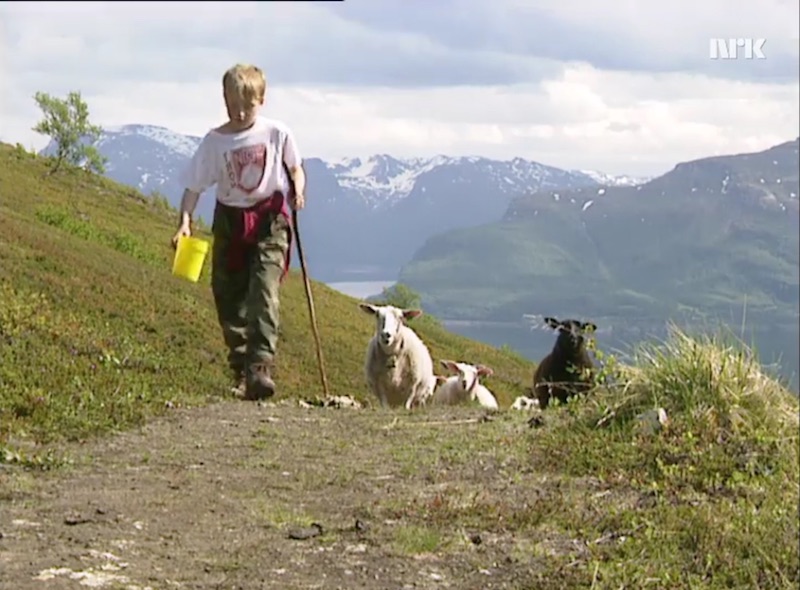
See Under Lyngsalpene, NRK 1996
Sources and current links
TV programme
Studio Nord, A report from the ecomuseum in North Troms, NRK 1988
Sea Sami near Porsanger, NRK, 1979
The fjord people in Kvænangen, Ivar Bjørklund, National Library of Norway