Hans Kristian Eriksen (1933-2014) grew up in Indre Kiberg in Varanger. He settled in Stonglandseidet in Tranøy municipality on Senja later in life. The author seems to have two homes: Kiberg and Senja, which is also evident in his writing and cultural activities. The marginal stories of Northern Norway, which had no place in the official history books, are nevertheless important themes in his literary work, and show that they were close to his heart.
Eriksen's writing has mainly dealt with the culture, nature and history of northern Norway, with a particular focus on the Kvens and World War II partisans. Kristiansen describes the migration and settlement of the Kvens in his semi-documentary work Hikers in the borderlands (1973) and the young adult novel Escape to the sea (1985). Eriksen was himself a Kvenæt. He has also written other works of fiction, including The fisherman and lord of spring (1975), The long bread route (1978), The child and the war (1983) and a poetry collection Song of Senja and the earth (1989).
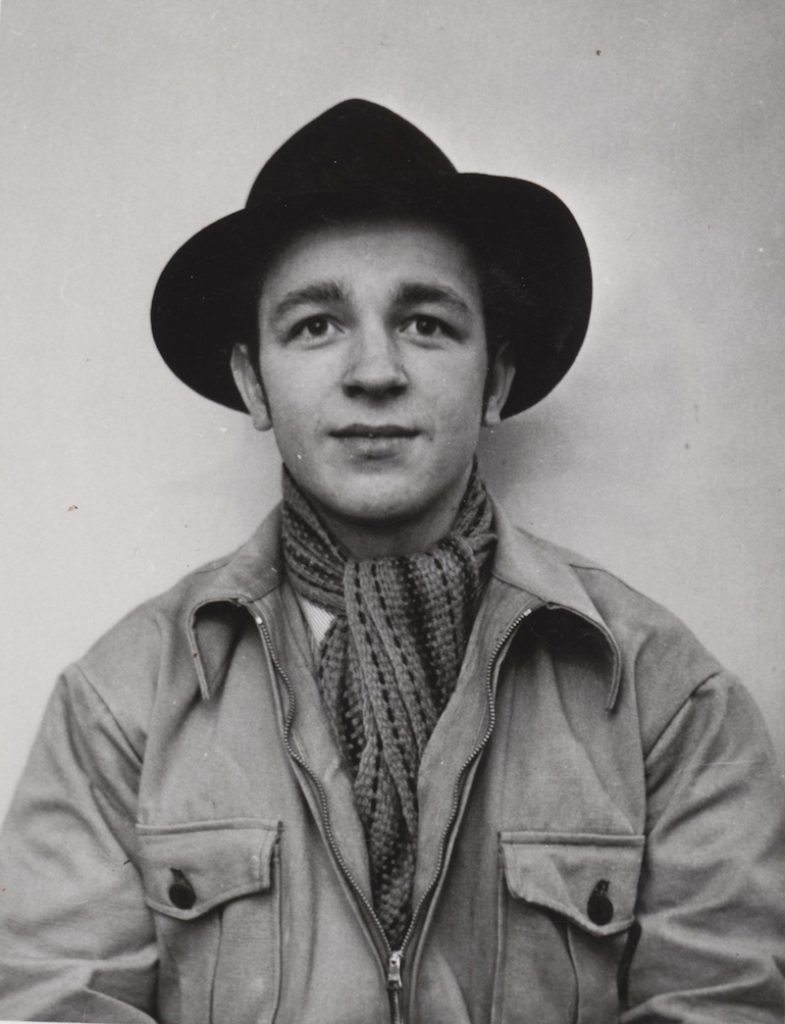
Hans Kristian Eriksen. Photo: private.
In 1978, Eriksen founded North Norwegian Magazine at Stonglandseidet, where he worked as editor until 2000. The aim was to publicise culture in Northern Norway and the North Calotte. The magazine was also known as Nordkalottmagasinet.
Hans Kristian Eriksen received several awards for his work in literature, history, culture and nature conservation. In 1979, he received Troms County's first cultural award and the following year Tromsø Municipality's cultural award. This was followed in 1982 by Tranøy Municipality's Culture Prize and in 1983 by the Blix Prize. Eriksen was one of the most important players in the North Norwegian cultural wave. For his efforts, he was awarded the Peter Dass Medal in 1984 and later in 1988 he was made an honorary member of Nordnorsk forfatterlag. In 1992 he was appointed a state fellow, and in 1996 he was awarded the King's Gold Medal of Merit.
The aforementioned long list of honours shows that Hans Kristian Eriksen has been an important person in several disciplines in Northern Norway. A number of articles have been written about him, including by historians Einar Niemi and Randi Rønning Balsvik, and a special seminar was organised about him in connection with the Finnmark International Literature Festival in 2016. However, there are few literary studies on his fiction, despite the fact that he was one of the pioneers of Kven literature.
Hikers in borderlands
Many in the east dreamed of the land by the sea in the harsh storms, and it probably had its greatest splendour before they travelled to it. They had their own name for this land, Ruija. The saying that the Kvens used must have originated early on: They were going to Ruija to cut gold with a knife. The gold was the fish.
(Wanderers in borderlands)
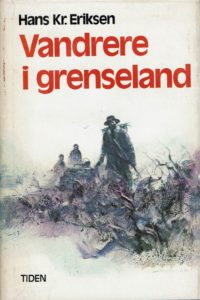
Wanderers in borderlands by Hans Kristian Eriksen.
Hans Kristian Eriksen's semi-documentary work Hikers in borderlands (1973) can be considered the first novel about the Kvens. As the book's cover text describes, the authors have «retrieved from Norwegian history a hitherto little-known chapter, a saga about some of those who laboured and built the country». In the articles, Eriksen describes the Kvens as skilful and hard-working people who cultivated the land, fished in the sea, and experienced injustice, but this population did not let misery break them. They had «sisu», as it is called in Kven/Finnish.
Hikers in the borderlands contains cultural-historical articles about the Kvens/Finns, their language, culture and history. These articles describe the reasons for migration and show the travelling routes of the Kvens. In addition, the book contains several personal stories and fictional accounts.
Escape to the sea
In 1985, Eriksen published a novel for young people The flight to the sea, which has the subtitle Juhani and Hilja. In the frame story, we follow a modern Hilja on a road trip with her family in the same parts of Finland where her Kven ancestors were born. In the afterword, the author writes that he wants to tell the story of refugees from a time other than the modern era. These refugees had to travel from hunger-stricken Finland to Varanger to find food. In the 1860s, Finland was hit by several bad years with long winters and cold summers. The year 1867 was the worst, a «year of hell», as the author and several others call it. Escape to the sea tells about this year.