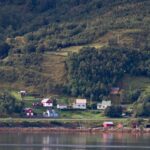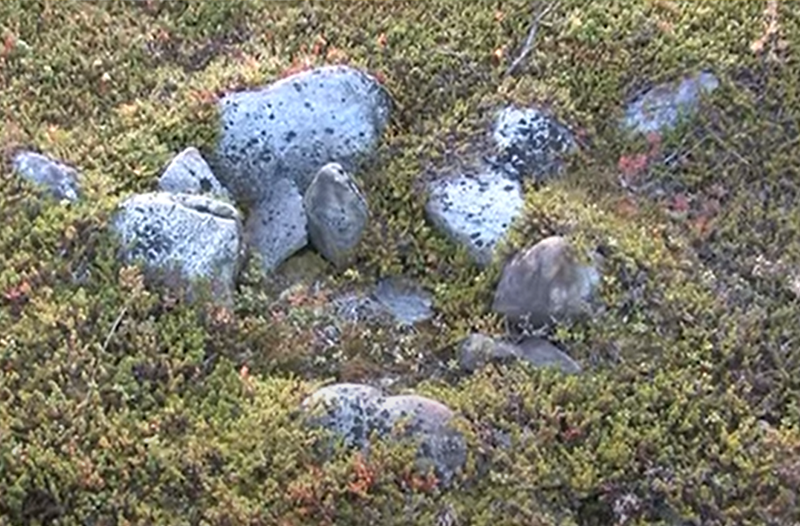
Gammetufters are the remains of farmsteads. In outer Gamvik in northern Troms, these mounds are still visible in the terrain.
The proximity to good fishing grounds has been one of Gamvik's assets, and the area has also been used for reindeer grazing for hundreds of years. From Gamvik there is a ferry route to Moskavuotna, Ullsfjorden.
When you stand on the outskirts of Gamvik, you realise that people have lived here for thousands of years. It's a beautiful place, where the waterfall and the river provide access to fresh water and there are also good fishing opportunities.
The terrain on the plateau is undulating and it may look as if nature created it that way. But the terrain is actually a flat field, which has been hillyised by former settlements. These former settlements that still appear in the terrain here are called gammetufter.
Gammetuften
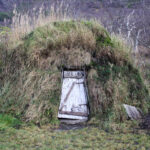
Gammetufts are the remains of a gamme. A gamme is a building consisting of a load-bearing wooden structure that has been covered with reeds and turf. Gables can be round or square.
In the centre of round gammes was an arran (hearth) that was used for cooking and heating. Historical sources tell us that in the Sami tradition, there were rules about where people should stay in the gammen. This was determined by factors such as gender and age. According to some sources, the three goddesses Sáráhkká, Juksáhkká and Uksáhkká each had their own area under the floor.
Rectangular farmhouses are often referred to as stave barns, which could be divided into several rooms. They often had a living area at one end and a barn area at the other. Extensions were also common.
Gammas were a relatively common form of Sámi housing until the beginning of the 20th century. The most recently used gammas had an almost modern interior. The oldest gammetufta is dated to around 100 AD.
Current links:
Den funntomme perioden, Nord-Troms og Finnmark i det første årtusen e.kr, National Library of Norway