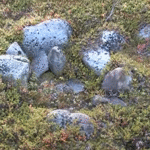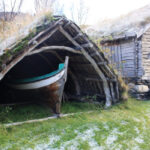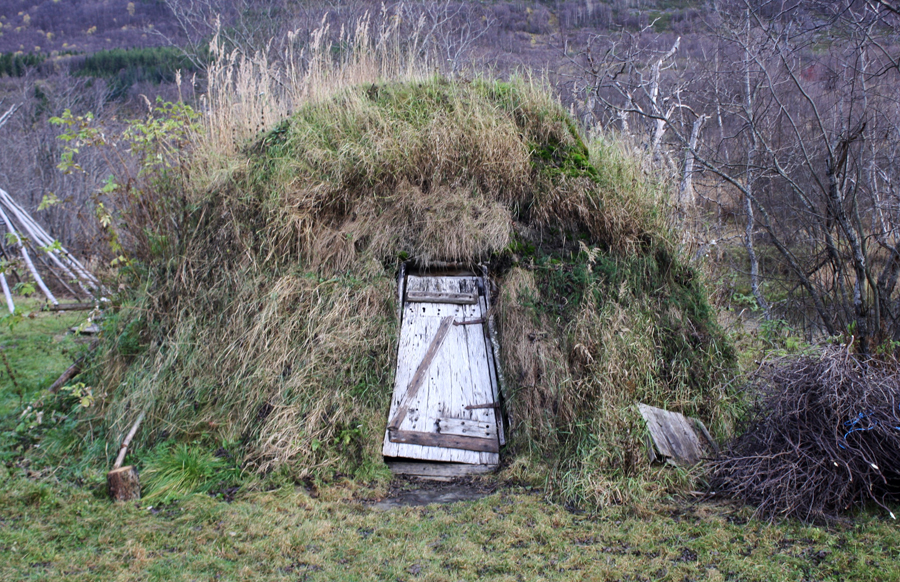
A gamme is an earthen hut built from tree trunks and covered with earth and/or peat. In some places in northern Troms, gammes were used as dwellings, barns and boathouses right up until the Second World War.
As far back as we know written accounts of Sami settlements, the Sami have used round barns or lavvos. Peat huts could be round, oval or rectangular. In the Lyngen area, round huts have dominated. The gams were seen as typically Sami, as Norwegians and Kvens usually lived in half-timbered houses.
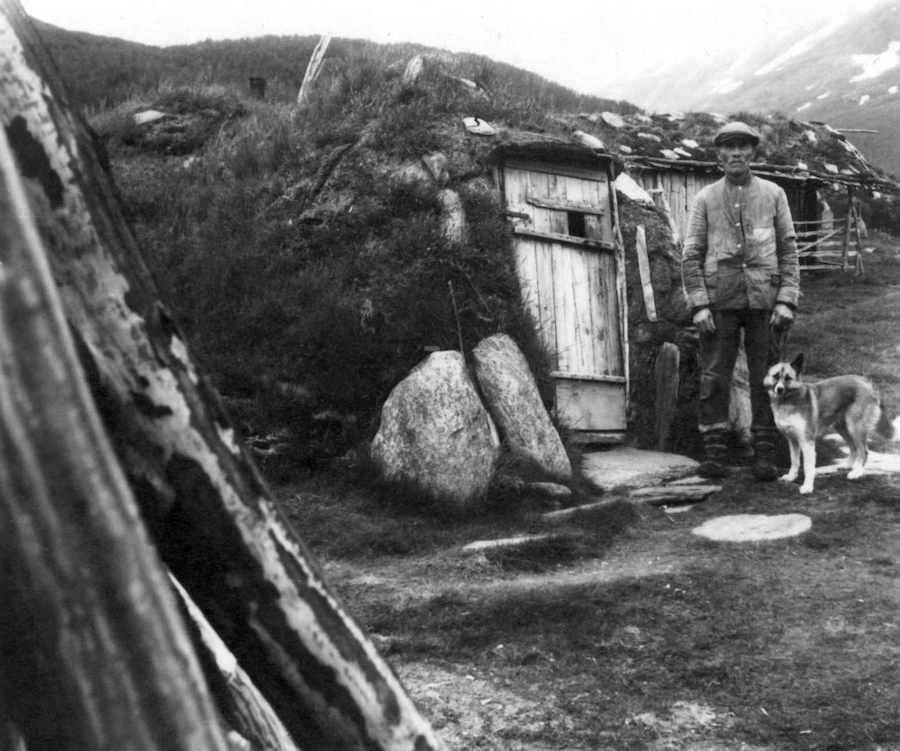
The floor surface varies from round to rectangular and can also be buried. In the centre of the gammen was an arran (hearth) that was used for cooking and heating. There is a smoke hole in the roof, with an opening just above the hearth. This is placed up from the ground to ensure good draught.
Ponds were used to house people, animals and boats. The cowshed was constructed in the same way as a residential cowshed. It contained stalls divided by tables for cows, or stone slabs for cattle along the walls. In the barn, there was often a fireplace for the cooking pot. This was used to cook fodder for the livestock from food and plants from the sea and the countryside.
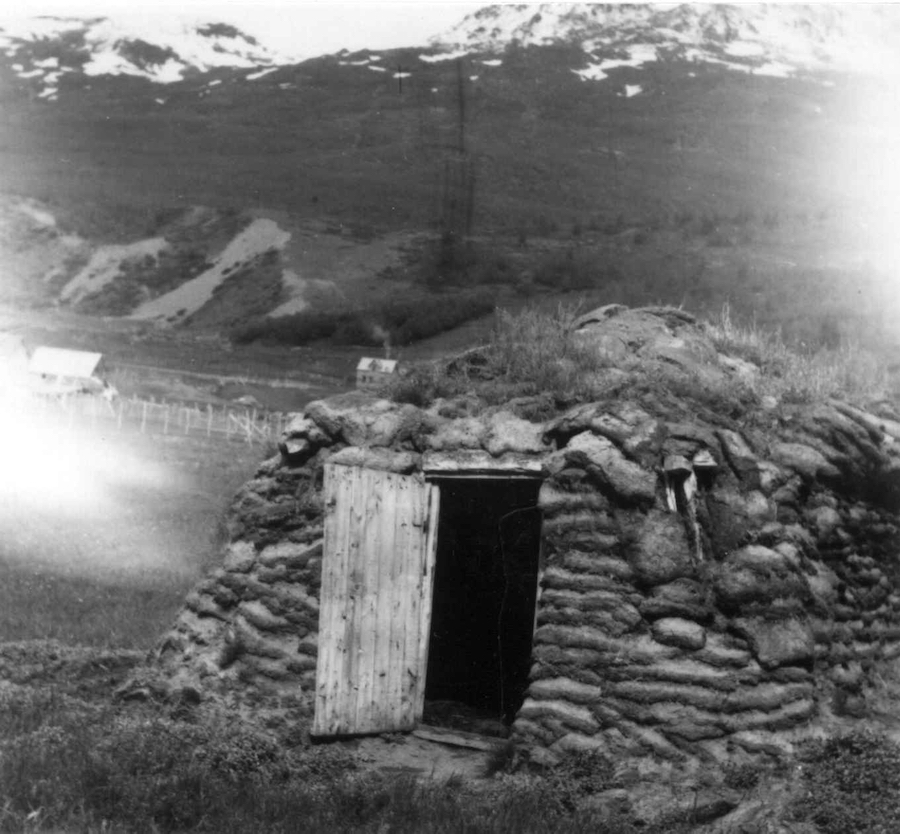
Rectangular shelters are often referred to as stick shelters, and these could be divided into several rooms. In an early version of this, people and animals lived in the same barn. Later, the gamme was built with a living area and a barn area, and extensions were also common.
The traditional gamete type... bealljegoahti has a timber frame with arched poles, but it can be covered with tent canvas and thus be a mobile dwelling - something used by the nomadic tribes - or it can be covered with twigs and turf.
The living quarters were often square, and under the same roof, the barn was also included, but only once in a while. ... The door and window in the living quarters almost always faced the sea, so they could see those who rowed on the sea and out at sea.
Anders Larsen, About the Sea Sami
There were rules about who could stay where in the pub, depending on gender and age.
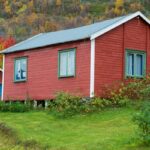
In the late 1800s and early 1900s, the gamma gradually disappeared. In some places they remained in use until the Second World War. Residential gammas gradually took on a more modern design, and the woodwork gradually resembled houses. The gamma had an oven and panelled walls on the inside.
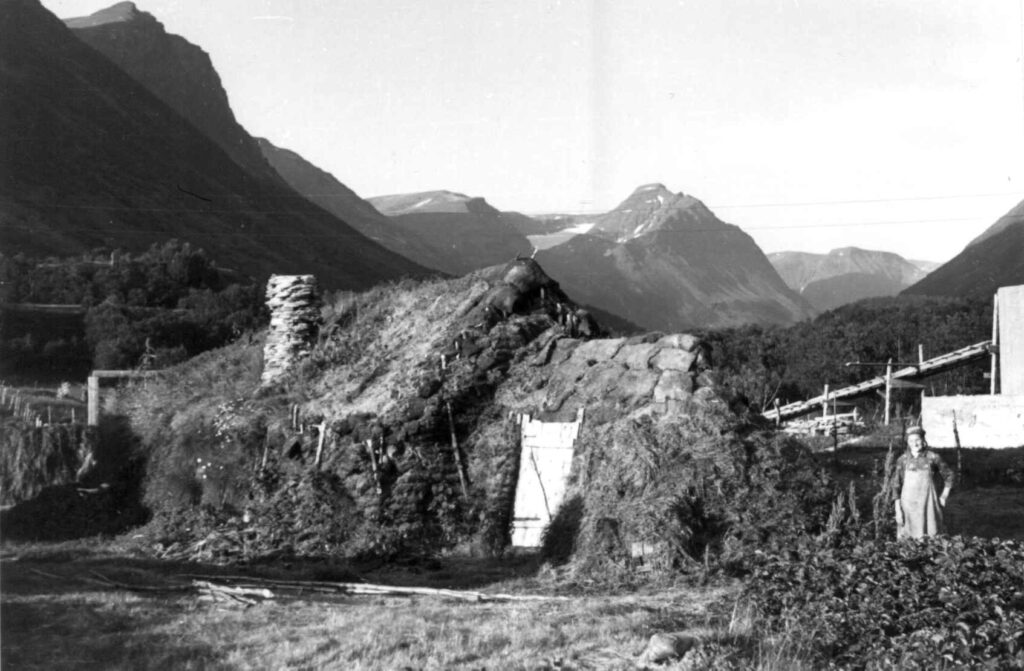
Gams are still used, especially barn gams; Lapps who live in poor conditions and cannot afford to buy a gamma for their family still live in the same gamma as the cattle. However, it is now rarer to meet such families, but in the «old days», i.e. 30 or 40 years ago, they exclusively «lived» together with the cattle both here in Lyngen and in many places up in Finnmark, which I have carefully enquired and investigated. It is worth noting that here in Lyngen, round barns are used for the cattle (fjøs, návet) and square or oblong barns for the family (goahti)..
Primary school teacher Peder Arild Mikalsen from Manndalen in Lappish relations 1896-98