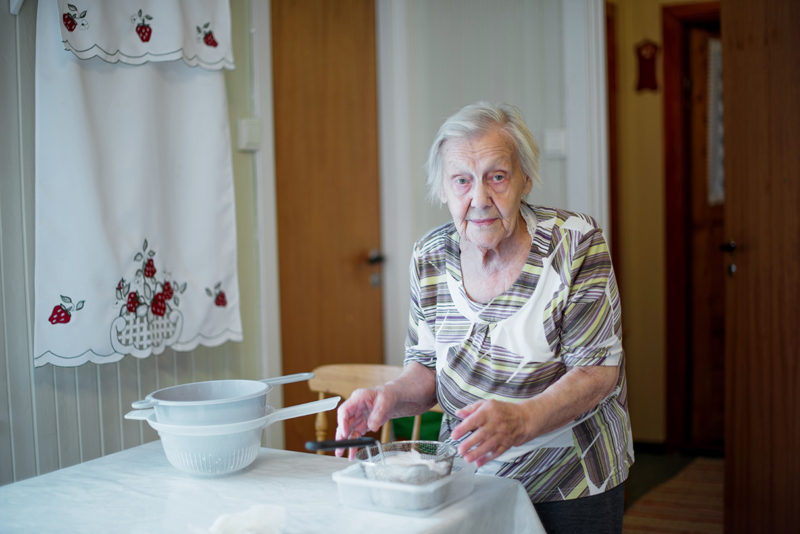
- Not many people have the energy to make coffee cheese now. It's gone. But I use to make it," says Elise Helene Solberg from Kåfjorddalen.
Coffee cheese
5 litres of UHT milk
1 tsp rennet
A little salt
I use a little lukewarm water in the saucepan before I pour in the milk. Now we need to heat the milk to the temperature of freshly soured milk. They didn't have temperature gauges in the old days. They used freshly soured milk because it was reasonably warm. It's about 30-35 degrees today.
Once we've got the milk to the right temperature, we add a teaspoon of rennet and a little salt and stir well. But it's all on the rennet bottle that they sell at Coop. Now it's supposed to stand for half an hour, but it shouldn't be on the hot plate and it shouldn't be stirred. If you stir it now, it won't burst. We'll take it out after half an hour. Then we stir the mixture into a ball. We divide the ball in half, because we're making two cheeses.
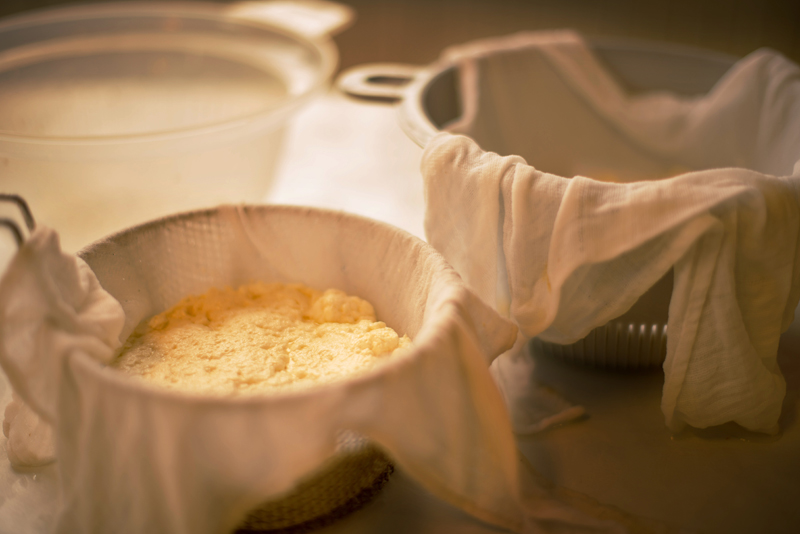
Once we've unpacked the cheese, we'll press them. Then we put them in clean, wet cloth. The cloth must be wet otherwise they will stick to the cheese when it dries.
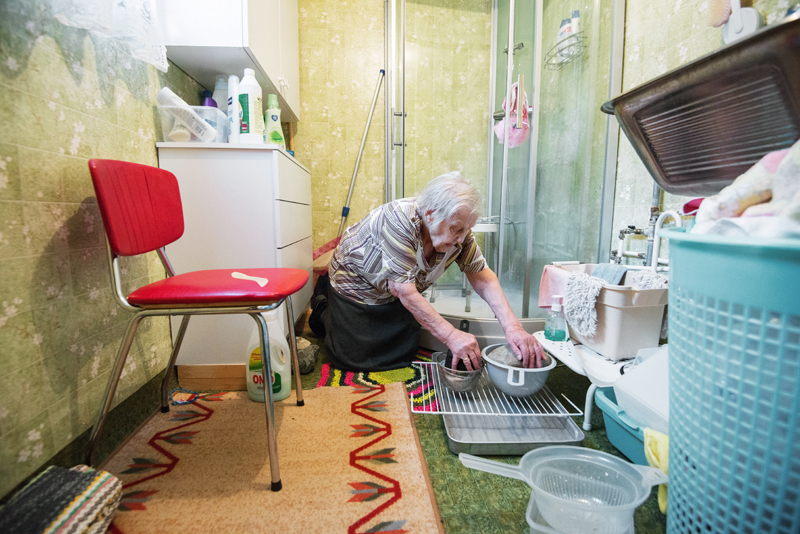
Now it needs to be pressurised for 24 hours in a place where it's not below freezing. If it freezes now, it will be watery. I've got a stone in the sink here that I can use to press it. That's it, that's it. They can stand here.
Once the cheese has been pressed, it must dry for a day or it will dissolve in the coffee. I use to dry them further in the fridge. It needs to be turned over often so it doesn't get stuck. Don't wrap it in plastic, wrap it in gauze or something similar. Then it can last a long time.

"People used to do a lot of hard labour back in the day. If it was hard work, you knew you'd get coffee cheese. Coffee cheese was powerful. If they got cheese in their coffee, they could work for a long time again. In the autumn it was busy. They had to get the dry hay in before it rained, and they didn't always have enough to eat. So coffee cheese was a good thing to have. Most people carried the hay in. Those who had horses drove horses. We young people trampled hay. Yes, every man was involved. From the biggest to the smallest. That time is over now.
Text and photo from the book «Seven varieties - stories from the kitchen counter» produced by the Centre for Northern Peoples in collaboration with Reni Jasinski Wright.
When the cows calved, they boiled the colostrum. It became cottage cheese. They thought it was delicious. They also made cheese. In the winter, they used cheese in their coffee when they had no milk.
From the book Om sjøsamene by Anders Larsen
Current links
Life in the old small kitchens, NRK
Interview with Sámi woman from Manndalen 1975, National Library of Norway