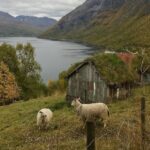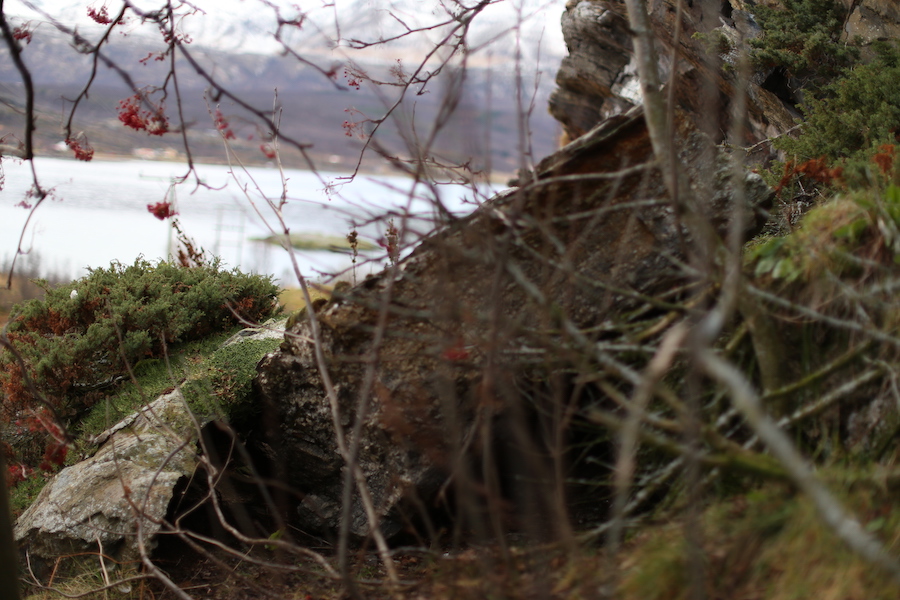
West of the southern end of Årøya is a small islet called Bonkholmen. Here, archaeologists have found the bones of brown bears that were buried there 1,500 years ago. These bear graves are one of the oldest discoveries of bear graves in Northern Norway.
In Sami cosmology, there was no sharp distinction between the living and the dead, and the bear rituals were about permission to kill, and to eat, an animal that was in the next world while it lay dormant. The bear was sacred and seen as an animal with special qualities. It was important for humans to maintain a good relationship with it, and the bear was therefore treated with great respect.
The bear was killed with a spear when it was hibernating in its winter den. It was then taken home to the settlement. Here the bear was skinned, boiled and eaten. The bones from the meal were placed in a bear grave.
There are several similarities between buried bear bones and human graves - the way they are buried and the terrain they are buried in. There are also similarities between humans and bears: bears can walk on two legs, they are omnivorous, they need «houses» and they suckle their cubs sitting down. There are also similarities between human and bear bones. The Sami believed that the similarities confirmed the relationship between humans and bears.
Ritual burials of bears have taken place in large parts of the circumpolar region. The bear graves found in Norway are located along the coast of Northern Norway, many on islands or islets.

The story of Bonki
In the 1960s, archaeologist Povl Simonsen learnt from a local fisherman that there was an old grave on Bonkholmen. The grave was said to have belonged to an old man who had lived in the 1800s. The man had been called Bonki and was the last person to resist the Christianisation of the Sami in Lyngen. Bonki is said to have laid down in a bear's grave to die. The informant showed him the grave site, and Povl found the grave of a man and a bear.
After the bones were handed over to Tromsø Museum, they were dated to the Late Iron Age (650-750 AD), and an osteological examination showed that the bones belonged to three bears. No remains of human bones were found. Later, an additional discovery of a metal buckle and neural tube was made in a cave. Based on the location of the find, there is reason to believe that this is another bear grave.
CURRENT LINKS
Lyngen: Årøyholmen, ishavskysten.no
Management plan for Årøyholmen 2017-2021, pdf
Årøyholmen is released by the defence, NRK 2004