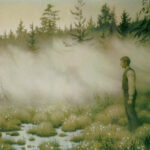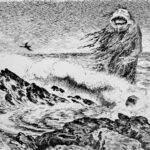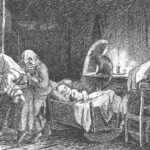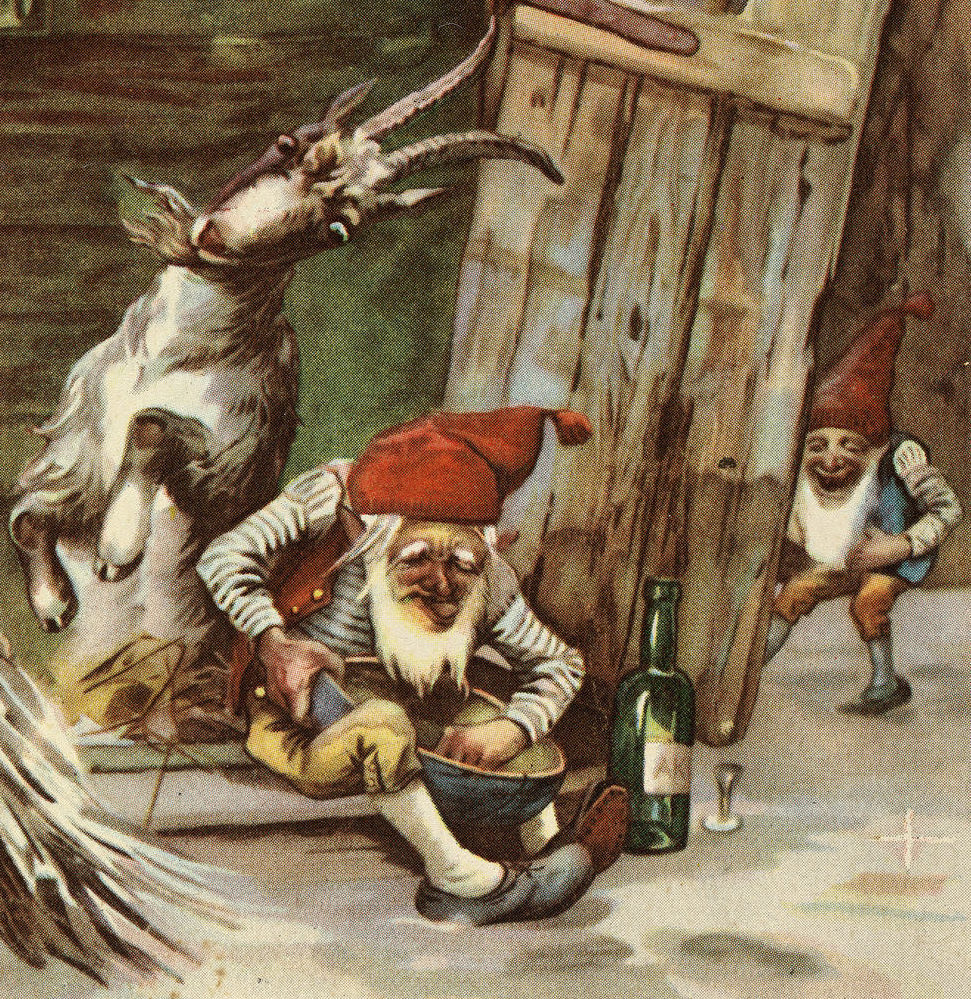
The modern Sea Sami Christmas celebrations differ little from those in Norway. There used to be a lot of folklore associated with Christmas, and some old customs are still alive and well.
Nissetoget / Ođđabeaigállát
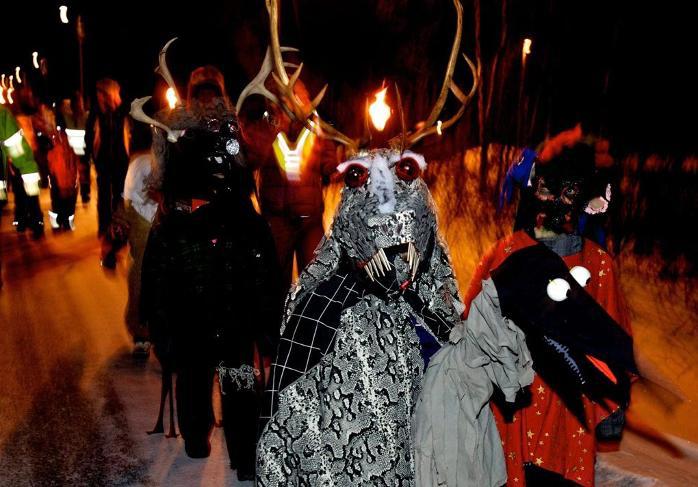
A tradition in Manndalen that is said to have existed since time immemorial is the Santa Claus procession on New Year's Eve. The custom is unique to Manndalen, and is described as an important cultural carrier in the village.
Older youths and adults dress up in scary, terrifying masks made of leather, rags, bones, seaweed and whatever else is at hand. They then meet up on New Year's Eve and march through the village. The aim is to make as much noise as possible and spread fear around them. The journey ends with dancing and revelry around a large bonfire.
Mask making is an important activity for many people at Christmas, and creativity is rife. In the 80s and 90s, there were also competitions for the ”best” New Year's mask.
No one knows when and where the custom came from. Similar customs can be found around the world. In Hungary, the so-called ”busjoaras” are considered one of the most spectacular folk festivals. In the city of Mohács, young men disguised in grotesque masks meet for an annual ceremony. They cause a ruckus in the streets and attack women with stockings filled with flour.
In the early hours of New Year's Eve, a much gentler version of the Santa Train is organised for children.
Going Daban / Christmas hump
It used to be customary to go Daban (Christmas hump), usually on Christmas Eve. Adults would dress up in costumes and go from house to house, knocking and asking: is Daban home? If the answer was no, they moved on to the next house, and if the answer was yes, they held out their bag or hat to receive sweets.
Even today, children sometimes go Christmas shopping, often during the Christmas holidays. They go from house to house singing Christmas carols for sweets.
In his book ”Lappenes forhold” (1896), Ole Thommasen describes the custom of the Christmas buck:
”Julebukken, juovlastállu”, was also a game in Lyngen; this game was played on one of the days between Christmas and New Year, preferably on 3. This game was played on one of the days between Christmas and New Year's Eve, preferably on the third day of Christmas, when one of the branch's adult youths dressed up in his costume as such with an outer garment of a twisted dork or pesk with a wide buckle for a belt; the hat was sewn from fist, and the apron was a piece of a carpet bag, the hat was so roomy that it went down to the neck with cut openings for the mouth, nose and eye holes. Attached to the beard on the upper lip was a splint of either reindeer skin or sheepskin; there was also a small bell attached to the back and a long staff in the hand...”.
Popular beliefs
There used to be a lot of folklore associated with Christmas. Here we have collected a bunch of them, described by Anders Larsen and Ole Thommasen.
On Christmas Eve, it is important that there is enough water in both the house and the barn, and the ladle must be hung by the water barrel so that Father Christmas can find water to quench his thirst. If he can't find water, he will suck the blood of the people in the house, making them ill, or he may cause some other misfortune that will happen in the near future.
All manual labour, including wood chopping, had to be completed before Christmas Eve. If necessary, it had to be done in the morning.
On Christmas Eve and Christmas Night, people forbade children to ski. They told the children that the Christmas calls (juovlagállát) were coming towards them in a sack.
On Christmas night, you could hear and see a lot of strange things from both driving and walking creatures, and if you were cold-blooded enough, you could also see things. If you have a special wish, you should stand on a main road, at an intersection, where the road goes to three sides, back and forth and to one of the sides. You will begin to hear one thing after another, and one is more terrible than the other, but you must lie or sit perfectly still in the position you first occupied. You will see, hear and feel the most terrible things, but you must not respond or do anything. If you manage to do this until everything is over, a person will finally come to you with questions and what you really want. Only then should you answer, and the wish will come true.
New year
From Anders Larsen «Om sjøsamene», 1950
In the past, the Sea Sami did not allow anyone to go out and look in through the window on New Year's morning. It was forbidden, because then you could see who would die in the new year from those inside. They said that once a farm boy went out and peered through the window while the others were sitting around the table eating New Year's Eve dinner. He saw that the master was sitting at the table without a head. The boy was terribly frightened and from that day on he was insane. The master died the same year (Kvænangen, Kvalsund).
Christmas food
Christmas porridge was a tradition, and for many it was the main course on Christmas Eve. It was also important to put Christmas porridge in the barn.
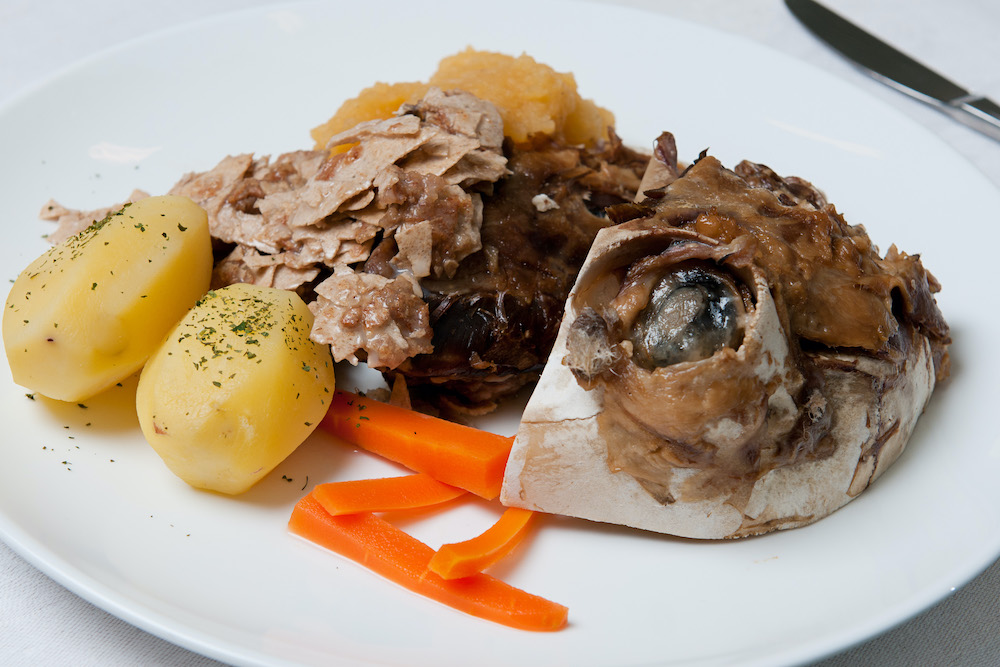
Flatbread made with sheep's heads was common at Christmas, and many people ate it on Christmas Eve. The sheep's heads were salted and dried, then boiled and eaten with flatbread, often with syrup.
Later, pinnekjøtt and ribs took over as Christmas food in Nord-Troms too. The most common fish dishes are lutefisk and cod.
Christmas in Olderdalen
Henrik Stefanus Grape Albrigtsen has described Christmas in Olderdalen 1925-1955 as follows:
When Christmas approached, it was a busy time in the house. Presents had to be made for everyone, the women knitted mittens and socks. The boys made various small items for the adults. The children got cars and boats. The girls got dolls. Eventually, the Christmas baking began. Mince pies and other biscuits were baked.
Little Christmas Eve there was reindeer racing
On Christmas Eve Christmas porridge was laid in the barn. Candles in all the windows. Then we ate Christmas porridge, tasted Christmas cakes and sang Christmas carols. Then it was time to hand out Christmas presents, and there was great excitement. As usual, the presents were made by the family themselves. But sometimes we were surprised with new presents. It was a great present. Especially if it was made by Bernard Helena (Helene Iversen). She had such a nice shape on her commas. The comma tips were so nice and matched the ski straps perfectly. Helena Pedersen, Ysteby was also very good at sewing commas.
On Christmas Day everyone had to stay at home. You were only allowed to go to church and gatherings.
2nd Christmas Day you often went to visit your neighbours. It was not common to be invited. On such visits, you often tasted your neighbour's Christmas baking. Christmas trees were not common in Laestadian families, but parents were often able to give in to their children's wishes.
Olderdalen from 1925-1955 by Henrik Stefanus Grape Albrigtsen
Current links
About the Sea Sami, National Library of Norway
Conditions of the patches, National Library of Norway
Putting on scary masks and chasing the neighbour, Nordlys
Ready for horror, Future in the North
Sami Christmas traditions, blog post Reaidu
Radio
The Santa Train in Manndalen, NRK, National Library of Norway